Piano Row District

The National Park Service has not published a boundary polygon for this district; the map shows the listed properties inside it and the district's reference point.
Why it's listed
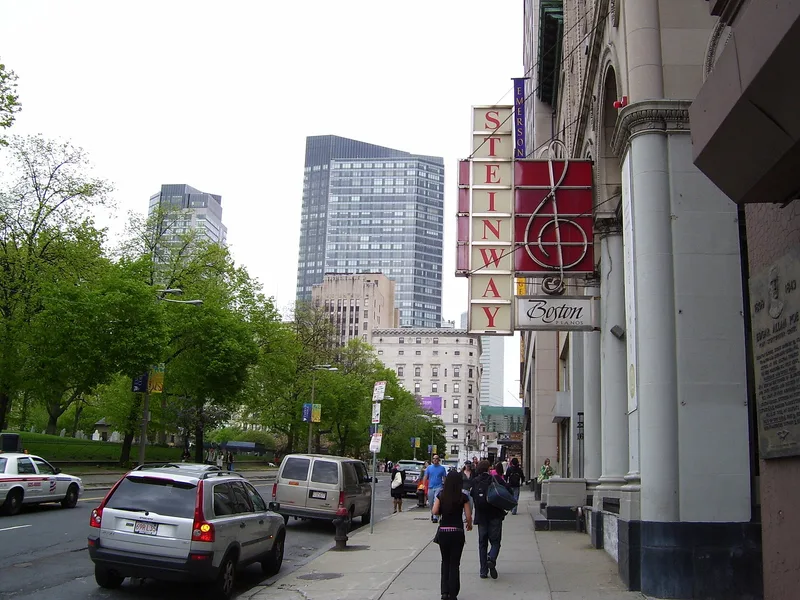
Piano Row is a group of late 19th and early 20th century commercial buildings in downtown Boston, running along Boylston and Tremont Streets, Park Square and Boylston Place beside Boston Common. The buildings reflect the city's music trade, particularly piano manufacturing and music publishing. One example is a 10-story marble Renaissance Revival office building at 178-179 Tremont Street, built for the Oliver Ditson Company, which in 1917 was the country's largest music publishing business. Other buildings include the Little and Colonial Buildings on Boylston Street, the Walker Buildings and the Hotel Touraine. The area was surveyed in 1979 as part of a study of Boston's theatre area, and its buildings are noted for the quality of their architecture and for achieving significance between about 1890 and the 1930s. The district is generally well maintained, privately owned and in commercial use, and its styles vary but belong to the turn of the century.
Machine-generated summary. This summary was generated by a language model from the official nomination document and has not been reviewed line by line by an editor. It may contain errors. Check the source document before relying on any detail. Source: nomination document (PDF) · catalog entry. Generated October 2026 (model claude-sonnet-5-5, prompt v1.0-2026-10-29).
| Styles | Turn-of-the-century styles, not uniform; includes Renaissance Revival (178-179 Tremont Street office building) |
|---|---|
| Areas of significance | Architecture, Performing Arts |
| Acreage | 4.3 |
| Boundary source | not published |
| Full listing page | Piano Row District (property record) |
What listing means for this property
This is a historic district. Buildings within its boundary are either contributing (they add to the district's significance) or non-contributing. Owners of contributing income-producing buildings can claim the 20% federal rehabilitation tax credit; homeowners should look at state credits. National Register districts impose no design review by themselves; a local historic district ordinance, if one exists, does (the difference explained).
General information, not legal or tax advice. Rules change; confirm with your State Historic Preservation Office or a qualified adviser.