Pettibone Farm

Why it's listed
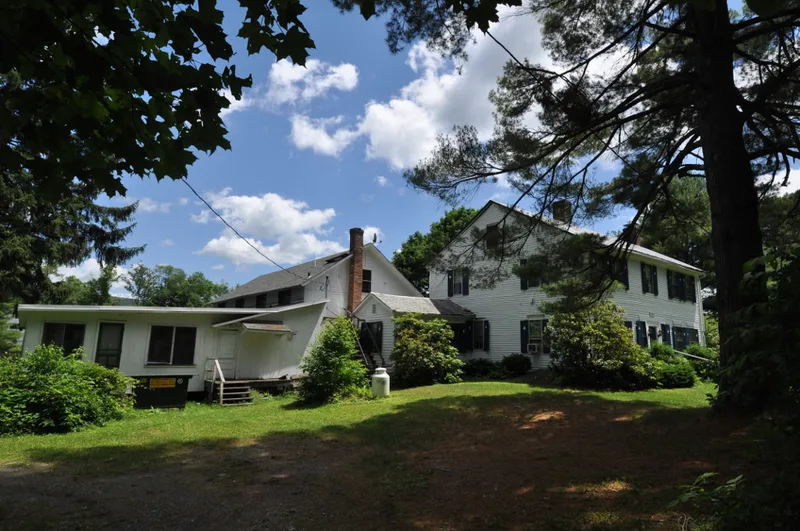
Pettibone Farm is a former hill farm in Lanesborough, Massachusetts, on Old Cheshire Road below Savage Hill. Its core is a 2 1/2-story clapboard farmhouse built about 1789 by Jonathan Pettibone or his son Amos, along with a horse barn and cow barn from about 1828, a second cow barn and corn crib from the mid-1800s, and stone walls. The house keeps its central-chimney plan, wide pine floorboards and original woodwork, though sash and the kitchen were updated around 1870. The Pettibone family farmed here for generations, and the Jenks family continued agricultural use after 1865. Farming ended in 1926 when a New York buyer purchased the property, and a summer camp opened in 1936, reflecting the Berkshires' turn toward tourism. The listed area covers about four acres around the buildings, since the surrounding fields no longer read as a farm landscape.
Machine-generated summary. This summary was generated by a language model from the official nomination document and has not been reviewed line by line by an editor. It may contain errors. Check the source document before relying on any detail. Source: nomination document (PDF) · catalog entry. Generated October 2026 (model claude-sonnet-5-5, prompt v1.0-2026-10-29).
| Period of significance | ca. 1789-1940 |
|---|---|
| Styles | Georgian/Federal |
| Areas of significance | Agriculture, Entertainment/Recreation, Architecture |
| Acreage | 4 |
| Boundary source | NPS cultural-resource GIS polygon |
| Full listing page | Pettibone Farm (property record) |
What listing means for this property
This is a historic district. Buildings within its boundary are either contributing (they add to the district's significance) or non-contributing. Owners of contributing income-producing buildings can claim the 20% federal rehabilitation tax credit; homeowners should look at state credits. National Register districts impose no design review by themselves; a local historic district ordinance, if one exists, does (the difference explained).
General information, not legal or tax advice. Rules change; confirm with your State Historic Preservation Office or a qualified adviser.