Parker Village Historic District

Why it's listed
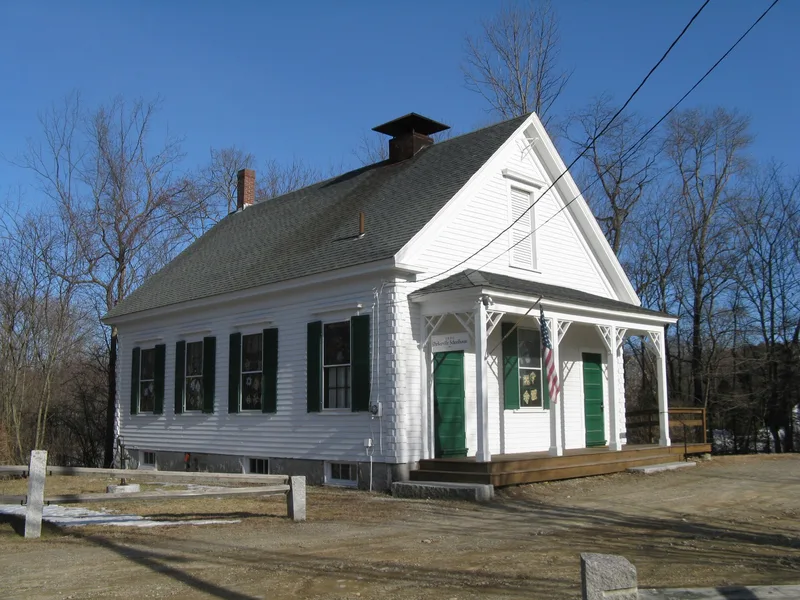
Parker Village, also called Parkerville, is a farming neighborhood in Westford, Massachusetts, spread across about 33 acres of hay fields, woods and residential yards along Concord and Carlisle Roads. Settled in part by members of the Parker family from Chelmsford, it contains nine historic houses, two former schoolhouses, a Colonial-era burial ground, a small fieldstone bridge over Nonset Brook, a granite signpost and long fieldstone walls. The oldest building is the brick Federal-style schoolhouse of about 1787, later used as a residence. The 1880 second schoolhouse now operates as a museum where local third graders experience an early 20th-century classroom. Most farmhouses date from about 1850 to 1870 and show Victorian Eclectic styling, some with later additions or vinyl siding. Several barns have been lost to age, fire and hurricanes, and newer houses have been added since 1950. The district is notable for keeping its open agricultural landscape and historic character, and for its archaeological potential.
Machine-generated summary. This summary was generated by a language model from the official nomination document and has not been reviewed line by line by an editor. It may contain errors. Check the source document before relying on any detail. Source: nomination document (PDF) · catalog entry. Generated October 2026 (model claude-sonnet-5-5, prompt v1.0-2026-10-29).
| Styles | Federal, Victorian Eclectic, Colonial Revival, Bungalow, Cape Cod |
|---|---|
| Areas of significance | Agriculture, Architecture, Education |
| Acreage | 33 |
| Boundary source | NPS cultural-resource GIS polygon |
| Full listing page | Parker Village Historic District (property record) |
What listing means for this property
This is a historic district. Buildings within its boundary are either contributing (they add to the district's significance) or non-contributing. Owners of contributing income-producing buildings can claim the 20% federal rehabilitation tax credit; homeowners should look at state credits. National Register districts impose no design review by themselves; a local historic district ordinance, if one exists, does (the difference explained).
General information, not legal or tax advice. Rules change; confirm with your State Historic Preservation Office or a qualified adviser.