Oxford-Crown Historic District

The National Park Service has not published a boundary polygon for this district; the map shows the listed properties inside it and the district's reference point.
Why it's listed
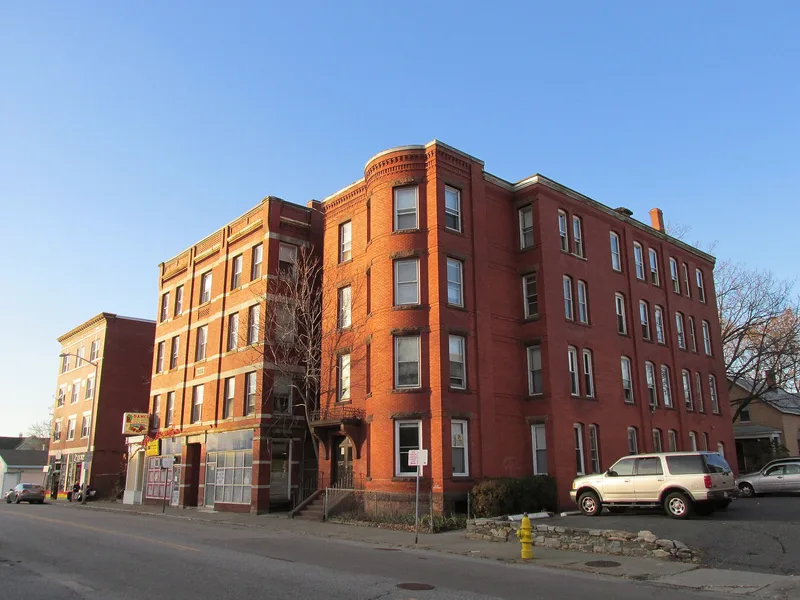
Oxford-Crown is a 7.5-acre neighborhood of 29 structures close to downtown Worcester, Massachusetts. Most are modest frame houses in the Greek Revival style, with pedimented gables, corner pilasters and columned porches. A few larger buildings stand among them, including the 1847 Oxford Street School, a 1908 Neo-Gothic former Friends Meeting House, and the Pleasant Street Baptist Church, a Romanesque design by Stephen C. Earle completed in 1891. The area grew in the 1840s and 1850s as Worcester industrialized. It began as Benjamin Butman's "Park Hill" subdivision, planned with large lots, but his business failed after the panic of 1837 and the plan was abandoned. Smaller lots followed, and local carpenter-builders put up homes for small businessmen and craftsmen. The district holds the city's greatest concentration of Greek Revival houses, and few buildings postdate 1860. Most homes are owner occupied, and commercial or industrial development has not encroached on the neighborhood.
Machine-generated summary. This summary was generated by a language model from the official nomination document and has not been reviewed line by line by an editor. It may contain errors. Check the source document before relying on any detail. Source: nomination document (PDF) · catalog entry. Generated October 2026 (model claude-sonnet-5-5, prompt v1.0-2026-10-29).
| Period of significance | 19th Century (1840s-1850s growth period) |
|---|---|
| Styles | Predominantly Classic/Greek Revival, with Renaissance Revival, Romanesque and Neo-Gothic buildings |
| Areas of significance | Architecture |
| Acreage | 7.5 |
| Boundary source | not published |
| Full listing page | Oxford-Crown Historic District (property record) |
What listing means for this property
This is a historic district. Buildings within its boundary are either contributing (they add to the district's significance) or non-contributing. Owners of contributing income-producing buildings can claim the 20% federal rehabilitation tax credit; homeowners should look at state credits. National Register districts impose no design review by themselves; a local historic district ordinance, if one exists, does (the difference explained).
General information, not legal or tax advice. Rules change; confirm with your State Historic Preservation Office or a qualified adviser.