Our Lady Help of Christians Historic District

Why it's listed
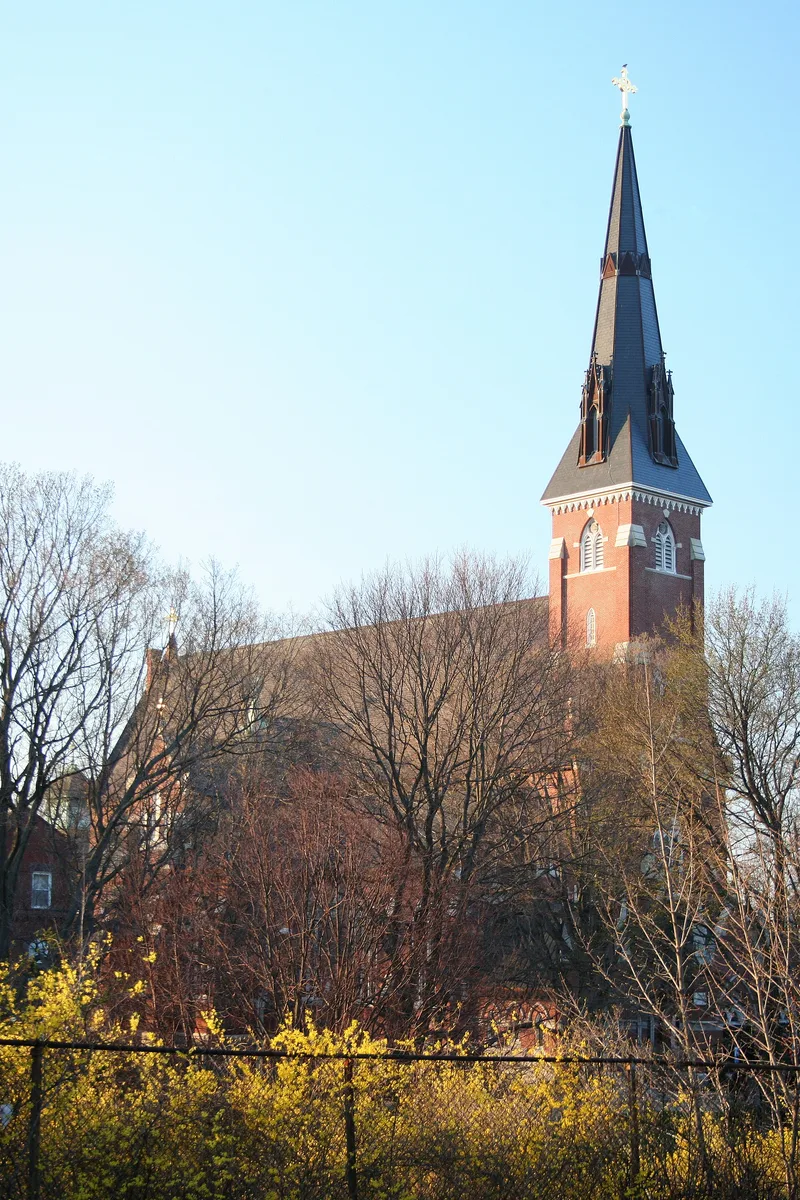
Our Lady Help of Christians is a cluster of red-brick Gothic Revival buildings on 6.6 landscaped acres in Nonantum, Newton, enclosed by a wrought-iron fence. The church, begun in 1873 and completed in 1875, was designed by Providence architect James Murphy, who was known for Catholic churches across New England. It has a tall central tower and spire. Around 1900 the church was remodeled, with transepts and a three-porch facade added to correct construction defects. A rectory of the late 1880s and a convent from 1890 to 1893 followed. The parish grew from Irish immigrants settling in the area and was led first by the Rev. Michael Green, then by the Rev. Michael Dolan, who built up its schools. The former boiler house held classrooms for the high school and is thought to be the first Catholic parish high school in Massachusetts. Newton Catholic High School, designed by Edward T.P. Graham, opened in 1924 and was later recognized as contributing to the district.
Machine-generated summary. This summary was generated by a language model from the official nomination document and has not been reviewed line by line by an editor. It may contain errors. Check the source document before relying on any detail. Source: nomination document (PDF) · catalog entry. Generated October 2026 (model claude-sonnet-5-5, prompt v1.0-2026-10-29).
| Period of significance | 1875-1924 |
|---|---|
| Styles | Gothic Revival (the convent is described as more closely based on Colonial Revival) |
| Areas of significance | Community Planning and Development, Architecture |
| Acreage | 6.6 |
| Boundary source | NPS cultural-resource GIS polygon |
| Full listing page | Our Lady Help of Christians Historic District (property record) |
What listing means for this property
This is a historic district. Buildings within its boundary are either contributing (they add to the district's significance) or non-contributing. Owners of contributing income-producing buildings can claim the 20% federal rehabilitation tax credit; homeowners should look at state credits. National Register districts impose no design review by themselves; a local historic district ordinance, if one exists, does (the difference explained).
General information, not legal or tax advice. Rules change; confirm with your State Historic Preservation Office or a qualified adviser.