Osgood Hill

Why it's listed
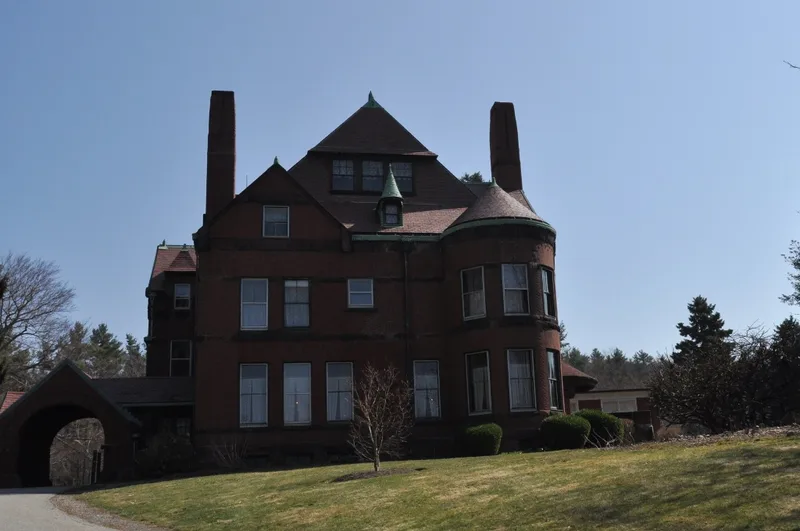
Osgood Hill is a 153-acre country estate rising from the shore of Lake Cochichewick in North Andover. Built between 1884 and 1886 for woolen manufacturer and later congressman Moses T. Stevens, it consists of a gatehouse, a brick main house, a stable, a carriage house and a gardener's house. The Boston firm Hartwell & Richardson designed the buildings in Romanesque Revival and Shingle styles that recall the work of H. H. Richardson, while landscape architect Ernest W. Bowditch laid out the siting, roads and paths. The fieldstone gatehouse closely resembles a Richardson gate lodge in North Easton. The main house combines red brick, brownstone bands, slate roofing and a chapel-like porte-cochere, and its interior retains richly finished oak and mahogany paneling. Boston University later used the property and added a dining room in the late 1950s. The town bought the estate in 1994 to prevent subdivision, and the property is now used as a function and conference center. It is described as the town's last intact 19th-century gentleman's country estate.
Machine-generated summary. This summary was generated by a language model from the official nomination document and has not been reviewed line by line by an editor. It may contain errors. Check the source document before relying on any detail. Source: nomination document (PDF) · catalog entry. Generated October 2026 (model claude-sonnet-5-5, prompt v1.0-2026-10-29).
| Styles | Late Victorian: Romanesque Revival/Shingle Style |
|---|---|
| Areas of significance | Architecture, Industry, Politics/Government, Social History |
| Acreage | 153.2 |
| Boundary source | NPS cultural-resource GIS polygon |
| Full listing page | Osgood Hill (property record) |
What listing means for this property
This is a historic district. Buildings within its boundary are either contributing (they add to the district's significance) or non-contributing. Owners of contributing income-producing buildings can claim the 20% federal rehabilitation tax credit; homeowners should look at state credits. National Register districts impose no design review by themselves; a local historic district ordinance, if one exists, does (the difference explained).
General information, not legal or tax advice. Rules change; confirm with your State Historic Preservation Office or a qualified adviser.