Olmsted Subdivision Historic District

Why it's listed
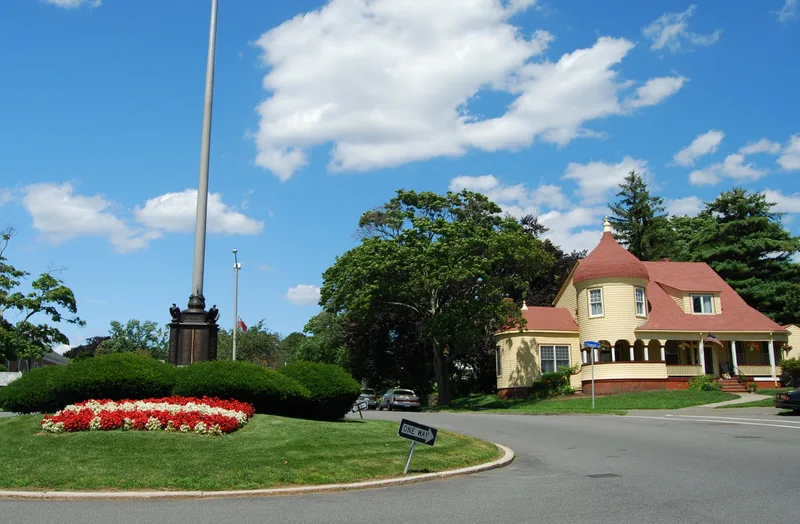
This section of central Swampscott, Massachusetts, covers about 130 acres of the former estate of Enoch Redington Mudge. His heirs subdivided it in 1888 using a plan by the Olmsted firm. Curving streets follow the hilly terrain and form bean-shaped blocks, with Monument Avenue as a central boulevard. Lots range from small to very large, though later subdivision made them more uniform. The district holds 569 contributing resources, including 554 buildings, mostly single-family houses built in the thirty years after the plan was drawn. Public buildings include the Town Hall in the Thomson House, the 1917 Public Library, the Post Office, three churches and an Odd Fellows Hall. Monument Avenue also holds war memorials and small parks. The earlier Humphrey House, a First Period saltbox, was moved onto the land. The area reflects Swampscott's change from fishing village and summer resort to commuter suburb served by streetcar and rail, and it keeps much of its Olmsted layout.
Machine-generated summary. This summary was generated by a language model from the official nomination document and has not been reviewed line by line by an editor. It may contain errors. Check the source document before relying on any detail. Source: nomination document (PDF) · catalog entry. Generated October 2026 (model claude-sonnet-5-5, prompt v1.0-2026-10-29).
| Styles | Post Medieval, Queen Anne, Shingle, Classical Revival, Craftsman, Colonial Revival |
|---|---|
| Areas of significance | Architecture, Community Planning and Development, Landscape Architecture, Social History |
| Acreage | 120 |
| Boundary source | NPS cultural-resource GIS polygon |
| Full listing page | Olmsted Subdivision Historic District (property record) |
What listing means for this property
This is a historic district. Buildings within its boundary are either contributing (they add to the district's significance) or non-contributing. Owners of contributing income-producing buildings can claim the 20% federal rehabilitation tax credit; homeowners should look at state credits. National Register districts impose no design review by themselves; a local historic district ordinance, if one exists, does (the difference explained).
General information, not legal or tax advice. Rules change; confirm with your State Historic Preservation Office or a qualified adviser.