Old Mill Site Historic District

The National Park Service has not published a boundary polygon for this district; the map shows the listed properties inside it and the district's reference point.
Why it's listed
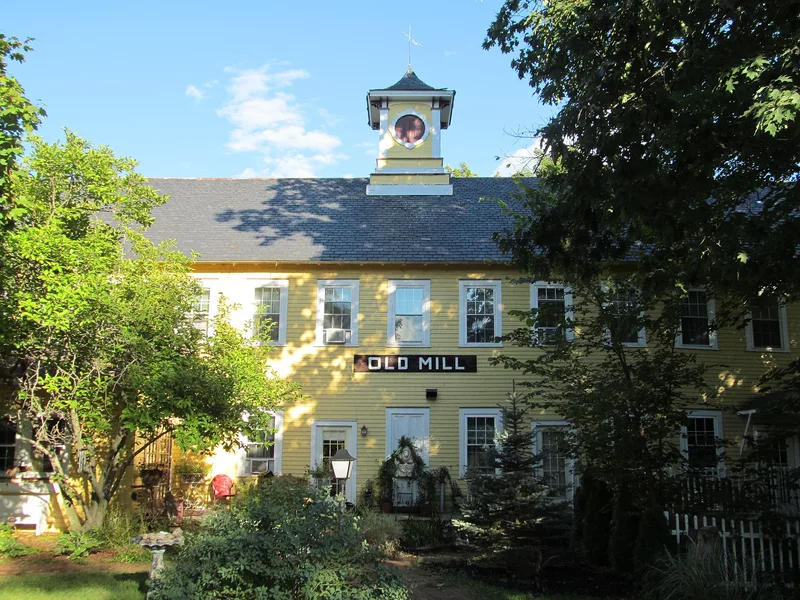
Along the Mill River in Hatfield, Massachusetts, a cluster of mill buildings and a metal bridge preserve a working landscape that has been used for industry since the 1600s. The district includes the three-story Shattuck Gun Shop of 1881, a post and beam building with slate roof and cupola, and the one-story Porter-McLeod Machine Shop of 1886, later enlarged. A small gristmill and power house holds a turbine installed around 1915, and a Warren pony truss bridge built in 1891 crosses upstream. Thomas Meekins received rights to the falls in 1661 and built a gristmill and sawmill. Later owners made pistols, machine tools, spark plugs and corn meal. The Shattuck turbine, installed in 1917, ran until 1965, and the dam and power works survive. The site was listed for its integrity and its record of rural industrial life and mill construction.
Machine-generated summary. This summary was generated by a language model from the official nomination document and has not been reviewed line by line by an editor. It may contain errors. Check the source document before relying on any detail. Source: nomination document (PDF) · catalog entry. Generated October 2026 (model claude-sonnet-5-5, prompt v1.0-2026-10-29).
| Period of significance | 1800-1899 (also 1900- checked; specific dates 1881, 1891) |
|---|---|
| Areas of significance | Industry, Engineering |
| Acreage | 2.2 |
| Boundary source | not published |
| Full listing page | Old Mill Site Historic District (property record) |
What listing means for this property
This is a historic district. Buildings within its boundary are either contributing (they add to the district's significance) or non-contributing. Owners of contributing income-producing buildings can claim the 20% federal rehabilitation tax credit; homeowners should look at state credits. National Register districts impose no design review by themselves; a local historic district ordinance, if one exists, does (the difference explained).
General information, not legal or tax advice. Rules change; confirm with your State Historic Preservation Office or a qualified adviser.