Old Harvard Yard

The National Park Service has not published a boundary polygon for this district; the map shows the listed properties inside it and the district's reference point.
Why it's listed
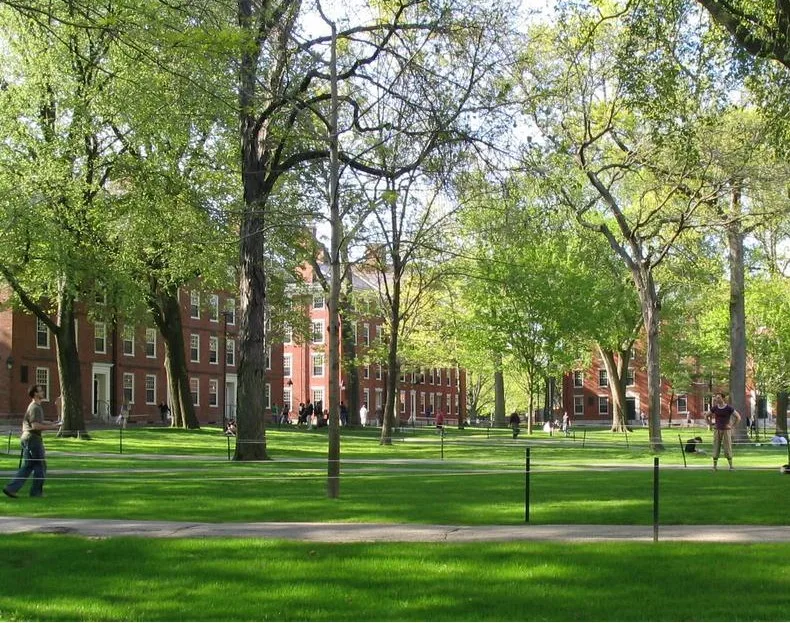
Old Harvard Yard is the historic core of Harvard University in Cambridge, Massachusetts. It is a tree-shaded open space of roughly ten acres, enclosed by freestanding brick buildings of three or four stories that were built as dormitories or academic halls. Massachusetts Hall, from 1718, is the oldest, and later buildings followed over the next century and a half. Hollis Hall and Harvard Hall date from the 1760s and were built by Thomas Dawes. Stoughton Hall and University Hall, from the early 1800s, reflect designs by Charles Bulfinch. Johnson Gate belongs to the brick and iron fencing designed by McKim, Meade and White after 1889. Wadsworth House, built in 1726, served as the residence of Harvard presidents until 1849. The district was listed because Harvard led the development of American higher education and because the Yard's buildings from three centuries form a cohesive and unusually fine setting. Interiors have been remodeled, but exteriors remain intact.
Machine-generated summary. This summary was generated by a language model from the official nomination document and has not been reviewed line by line by an editor. It may contain errors. Check the source document before relying on any detail. Source: nomination document (PDF) · catalog entry. Generated October 2026 (model claude-sonnet-5-5, prompt v1.0-2026-10-29).
| Styles | Georgian, Federal, and neo-Georgian |
|---|---|
| Areas of significance | Education, Architecture |
| Acreage | 10 |
| Boundary source | not published |
| Full listing page | Old Harvard Yard (property record) |
What listing means for this property
This is a historic district. Buildings within its boundary are either contributing (they add to the district's significance) or non-contributing. Owners of contributing income-producing buildings can claim the 20% federal rehabilitation tax credit; homeowners should look at state credits. National Register districts impose no design review by themselves; a local historic district ordinance, if one exists, does (the difference explained).
General information, not legal or tax advice. Rules change; confirm with your State Historic Preservation Office or a qualified adviser.