Old Curtisville Historic District

Why it's listed
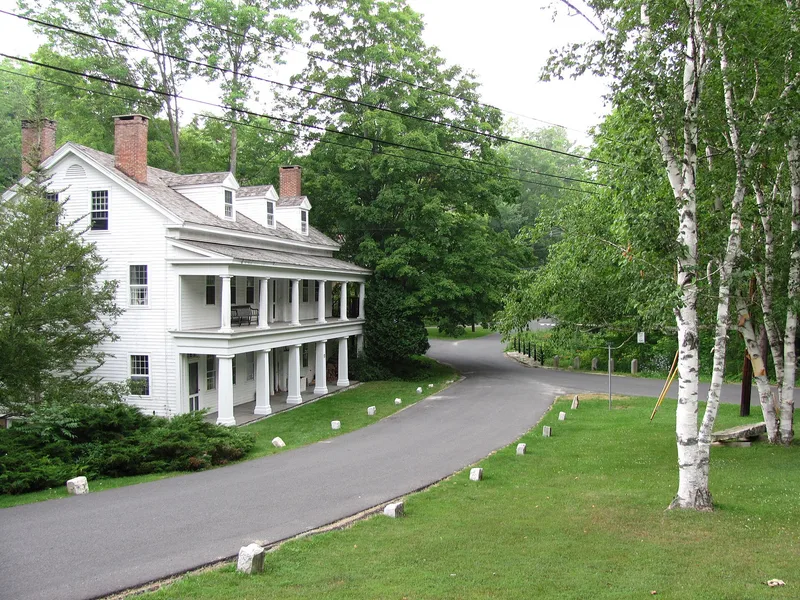
Old Curtisville, also known as Interlaken, is a rural village district northwest of Stockbridge, Massachusetts, spread over 170 acres along Route 183 and Willard Hill Road. It contains 53 structures, mostly two-story Federal and Greek Revival houses, plus the sites of about 20 mills and other buildings. Notable buildings include the 1870 French Second Empire Citizens Hall, the 1826 brick Congregational Church, Burrall's Store and Post Office, and the 1833 Curtisville Inn with its Greek fretwork detail. The village grew around seven small mills, with a chair factory, foundry, distillery and other works in the late 1820s and 1830s. The railroad bypassed it, so growth slowed and the setting stayed largely intact. After the Civil War the Pagenstacher mill, the first wood-pulp paper mill in America, operated here briefly. Stone dams, raceways and a stone bridge survive. The artist Ammi Philips once lived in the district.
Machine-generated summary. This summary was generated by a language model from the official nomination document and has not been reviewed line by line by an editor. It may contain errors. Check the source document before relying on any detail. Source: nomination document (PDF) · catalog entry. Generated October 2026 (model claude-sonnet-5-5, prompt v1.0-2026-10-29).
| Period of significance | 1800-1899 |
|---|---|
| Styles | Federal and Greek Revival, with French Second Empire (Citizens Hall) |
| Areas of significance | Industry, Architecture |
| Acreage | 170 |
| Boundary source | NPS cultural-resource GIS polygon |
| Full listing page | Old Curtisville Historic District (property record) |
What listing means for this property
This is a historic district. Buildings within its boundary are either contributing (they add to the district's significance) or non-contributing. Owners of contributing income-producing buildings can claim the 20% federal rehabilitation tax credit; homeowners should look at state credits. National Register districts impose no design review by themselves; a local historic district ordinance, if one exists, does (the difference explained).
General information, not legal or tax advice. Rules change; confirm with your State Historic Preservation Office or a qualified adviser.