Oak Grove Cemetery

Why it's listed
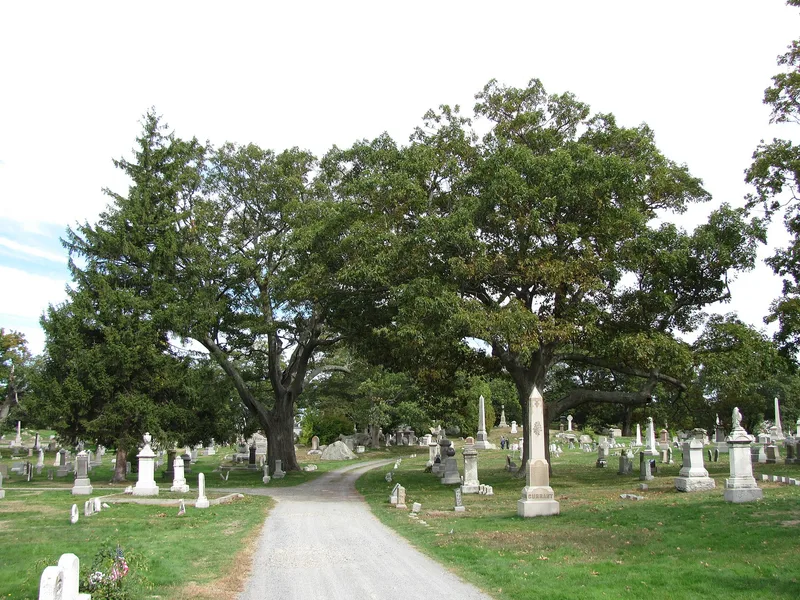
Oak Grove Cemetery covers about 15 acres in Gloucester, Massachusetts. Boston landscape gardeners Copeland and Cleveland laid it out in 1854 as a romantic park, with winding avenues and paths named for plants, and it was consecrated in June 1855. Later additions toward Washington and Grove Streets kept the original curving plan. Granite gate piers survive on Washington Street, and a Romanesque granite memorial to businessman George R. Bradford, built in 1903-1904, marks the likely site of a planned chapel. The cemetery is believed to be the first joint work of Robert Morris Copeland and Horace W. S. Cleveland, two early American landscape architects. It also represents the nineteenth-century move away from crowded churchyards toward landscaped burial grounds. Buried here are painters Fitz Hugh Lane and John Henry Twachtman, opera singer Emma Abbott, sea captains, local benefactors and baseball player Ralph Perkins. Vandalism and neglect have damaged monuments and plantings.
Machine-generated summary. This summary was generated by a language model from the official nomination document and has not been reviewed line by line by an editor. It may contain errors. Check the source document before relying on any detail. Source: nomination document (PDF) · catalog entry. Generated October 2026 (model claude-sonnet-5-5, prompt v1.0-2026-10-29).
| Period of significance | 1854 |
|---|---|
| Areas of significance | Community Planning and Development, Landscape Architecture |
| Acreage | 15 |
| Boundary source | NPS cultural-resource GIS polygon |
| Full listing page | Oak Grove Cemetery (property record) |
What listing means for this property
This is a historic district. Buildings within its boundary are either contributing (they add to the district's significance) or non-contributing. Owners of contributing income-producing buildings can claim the 20% federal rehabilitation tax credit; homeowners should look at state credits. National Register districts impose no design review by themselves; a local historic district ordinance, if one exists, does (the difference explained).
General information, not legal or tax advice. Rules change; confirm with your State Historic Preservation Office or a qualified adviser.