Northampton Veterans Administration Hospital Historic District

Why it's listed
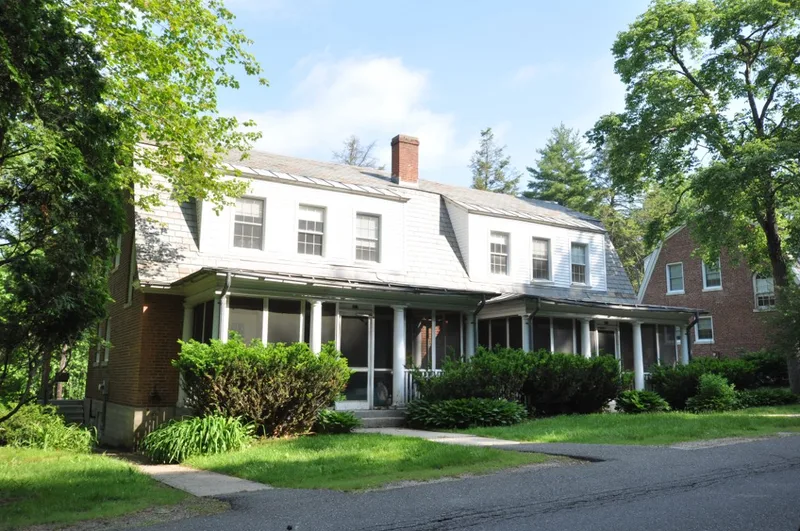
Set on a hilltop about three miles northwest of downtown Northampton, this veterans hospital campus opened in 1924 as a neuropsychiatric facility. Construction began in 1922 from designs by the Army Quartermaster Corps Construction Service. The earliest patient ward and treatment buildings, the Main Building and the Mess and Kitchen Building are grouped around an oval drive. Brick exteriors carry restrained Colonial Revival details, and staff duplexes and officer housing along the entrance drive show Dutch Colonial Revival features such as gambrel roofs. Maintenance and utility buildings sit down the slope to the southwest. The grounds once covered roughly 286 acres, where patients worked on farm operations as occupational therapy; the campus has since shrunk to about 105 acres. The district includes 36 contributing resources dating from 1922 to 1950, and it resembles other early-1920s veterans hospitals in Iowa, Michigan and Ohio. The campus remains in use as a medical center.
Machine-generated summary. This summary was generated by a language model from the official nomination document and has not been reviewed line by line by an editor. It may contain errors. Check the source document before relying on any detail. Source: nomination document (PDF) · catalog entry. Generated October 2026 (model claude-sonnet-5-5, prompt v1.0-2026-10-29).
| Period of significance | 1922-1950 |
|---|---|
| Styles | Late 19th and 20th Century Revivals / Colonial Revival (Dutch Colonial Revival staff residences) |
| Areas of significance | Architecture, Politics/Government, Health/Medicine |
| Acreage | 105 |
| Boundary source | NPS cultural-resource GIS polygon |
| Full listing page | Northampton Veterans Administration Hospital Historic District (property record) |
What listing means for this property
This is a historic district. Buildings within its boundary are either contributing (they add to the district's significance) or non-contributing. Owners of contributing income-producing buildings can claim the 20% federal rehabilitation tax credit; homeowners should look at state credits. National Register districts impose no design review by themselves; a local historic district ordinance, if one exists, does (the difference explained).
General information, not legal or tax advice. Rules change; confirm with your State Historic Preservation Office or a qualified adviser.