Northampton Downtown Historic District (Boundary Increase)

Why it's listed
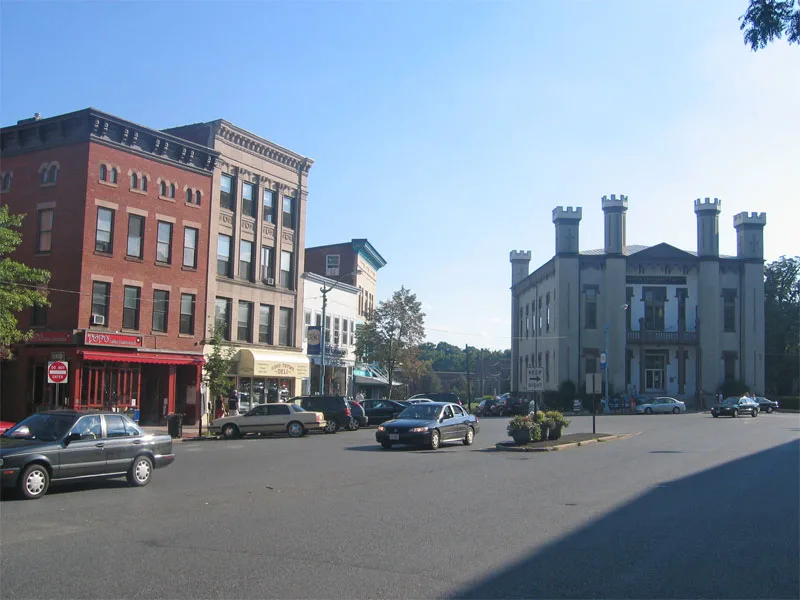
Market Street, at the northeastern edge of downtown Northampton, Massachusetts, holds thirteen commercial and warehouse buildings built between 1886 and 1915, along with one house from about 1700. Most are brick and one to three stories tall, set along a twenty-foot-wide street beside a railroad bed raised about fifteen feet in 1896. Warehouses are plain, with double loading doors, while buildings on the east side have zinc and wood cornices and brownstone window surrounds. The area began as housing, then became a wholesale district after the Connecticut River Railroad reached Northampton in 1845. A flour and grist mill complex burned in 1894, and the vacant land was subdivided in 1900 and rebuilt with warehouses and a cold storage plant. By 1915 the street was fully built. It is described as the only intact warehouse and wholesale area in the city, and it was added to the downtown historic district for that reason.
Machine-generated summary. This summary was generated by a language model from the official nomination document and has not been reviewed line by line by an editor. It may contain errors. Check the source document before relying on any detail. Source: nomination document (PDF) · catalog entry. Generated October 2026 (model claude-sonnet-5-5, prompt v1.0-2026-10-29).
| Styles | Late Victorian Commercial, Victorian Gothic detailing, Classical Revival warehouse detailing, and one Colonial vernacular house |
|---|---|
| Areas of significance | Commerce, Transportation, Architecture |
| Acreage | 1.9 |
| Boundary source | NPS cultural-resource GIS polygon |
| Full listing page | Northampton Downtown Historic District (Boundary Increase) (property record) |
What listing means for this property
This is a historic district. Buildings within its boundary are either contributing (they add to the district's significance) or non-contributing. Owners of contributing income-producing buildings can claim the 20% federal rehabilitation tax credit; homeowners should look at state credits. National Register districts impose no design review by themselves; a local historic district ordinance, if one exists, does (the difference explained).
General information, not legal or tax advice. Rules change; confirm with your State Historic Preservation Office or a qualified adviser.