North Hatfield Historic District

Why it's listed
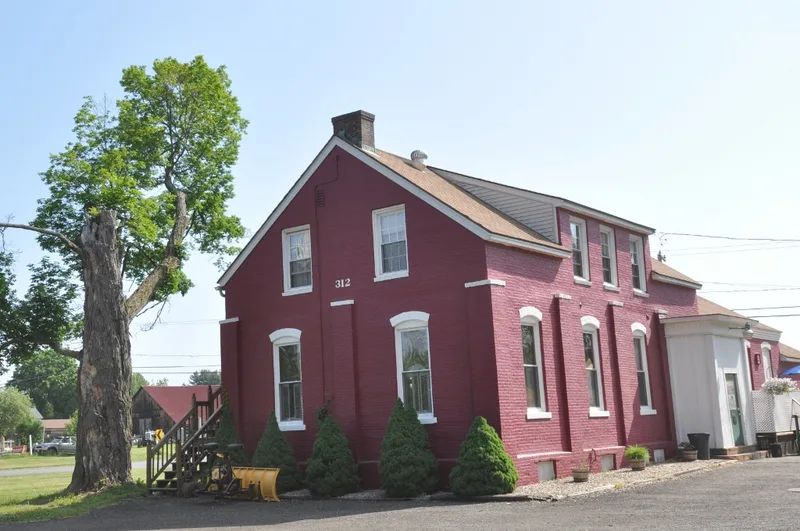
North Hatfield is a small farming village in Hatfield, Massachusetts, laid out around the crossing of West Street and Depot Road and divided by railroad tracks. Most of its one-and-a-half to two-and-a-half-story wood-frame buildings date from 1820 to 1940, and they include houses, barns, outbuildings and former commercial and railroad structures. The area was once mostly pine plain, and farms spread through it in the 1840s and 1850s. When the Connecticut River Rail Road built its line two miles from Hatfield center, the tracks passed through North Hatfield and gave the village its focus. Architecture here is modest and practical. Raised cape houses, a Gothic Revival "lightning splitter" dated 1840, a former railroad depot converted to a house, and a post office converted from a dwelling show how buildings were moved, altered and reused. The district is significant for its agricultural and transportation history and for this plain village architecture, with a period of significance of 1820 to 1946.
Machine-generated summary. This summary was generated by a language model from the official nomination document and has not been reviewed line by line by an editor. It may contain errors. Check the source document before relying on any detail. Source: nomination document (PDF) · catalog entry. Generated October 2026 (model claude-sonnet-5-5, prompt v1.0-2026-10-29).
| Period of significance | 1820-1946 |
|---|---|
| Styles | Mid-19th Century: Greek Revival, Gothic Revival; Late Victorian: Italianate, Second Empire, Queen Anne; Early 20th Century: Craftsman |
| Areas of significance | Agriculture, Transportation, Architecture |
| Acreage | 64.5 |
| Boundary source | NPS cultural-resource GIS polygon |
| Full listing page | North Hatfield Historic District (property record) |
What listing means for this property
This is a historic district. Buildings within its boundary are either contributing (they add to the district's significance) or non-contributing. Owners of contributing income-producing buildings can claim the 20% federal rehabilitation tax credit; homeowners should look at state credits. National Register districts impose no design review by themselves; a local historic district ordinance, if one exists, does (the difference explained).
General information, not legal or tax advice. Rules change; confirm with your State Historic Preservation Office or a qualified adviser.