North Egremont Historic District

Why it's listed
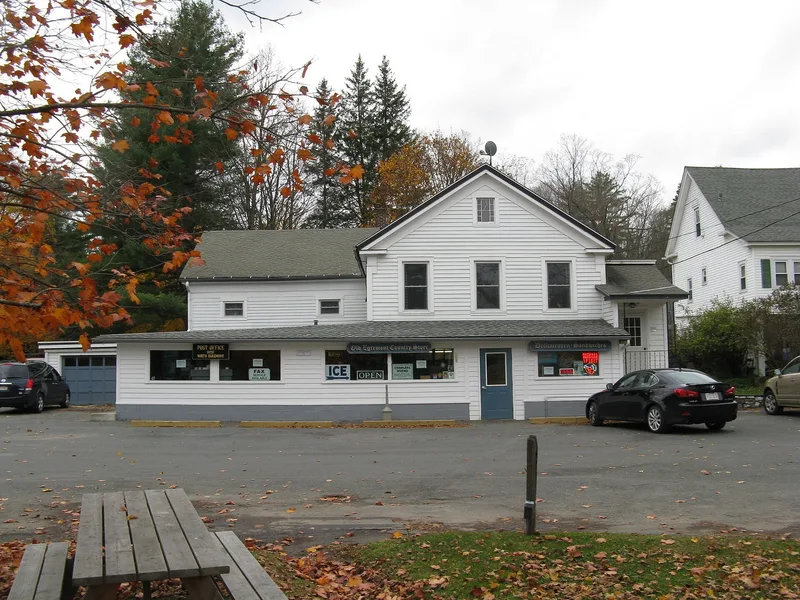
North Egremont is a crossroads village in the Berkshire Hills of western Massachusetts, close to the New York border. The district covers land along Route 71 and Prospect Lake Road, with the Green River forming its eastern edge. It contains 53 contributing buildings, along with structures, sites and an object. Most are small, one- to two-story frame houses in simple Federal and Greek Revival styles, and many farmsteads keep their barns. Craft and trade buildings include a mill house of 1794, a blacksmith shop, a cabinet shop and the North Egremont Store of 1848-1849, which is still operating. Three Protestant churches and an 1880 school represent community life. The oldest firmly dated building is the Joshua Millard House, with 1764 and 1798 components. The village is valued as a well-preserved example of a settlement type common in Massachusetts hill towns, tied to an economy of agriculture, processing and crafts. Later buildings are mostly modest and minimally intrusive.
Machine-generated summary. This summary was generated by a language model from the official nomination document and has not been reviewed line by line by an editor. It may contain errors. Check the source document before relying on any detail. Source: nomination document (PDF) · catalog entry. Generated October 2026 (model claude-sonnet-5-5, prompt v1.0-2026-10-29).
| Period of significance | 1720-1890 |
|---|---|
| Styles | New England Colonial; Federal; Greek Revival; Romanesque Revival; Classical Revival; Queen Anne |
| Areas of significance | Community Planning and Development, Agriculture, Architecture |
| Acreage | 234.3 |
| Boundary source | NPS cultural-resource GIS polygon |
| Full listing page | North Egremont Historic District (property record) |
What listing means for this property
This is a historic district. Buildings within its boundary are either contributing (they add to the district's significance) or non-contributing. Owners of contributing income-producing buildings can claim the 20% federal rehabilitation tax credit; homeowners should look at state credits. National Register districts impose no design review by themselves; a local historic district ordinance, if one exists, does (the difference explained).
General information, not legal or tax advice. Rules change; confirm with your State Historic Preservation Office or a qualified adviser.