Nobility Hill Historic District

Why it's listed
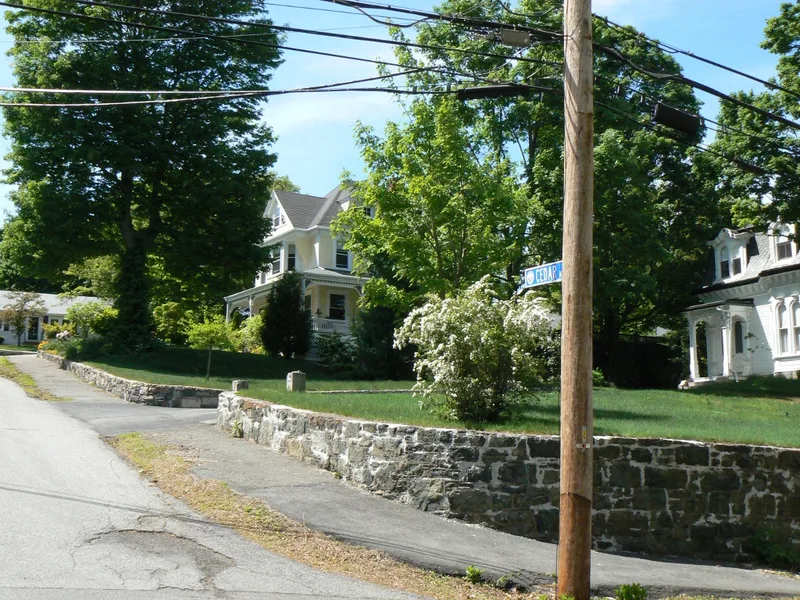
Nobility Hill is a compact residential neighborhood on a hilltop west of Stoneham's Central Square, centered on Cedar Avenue, Chestnut Street and Maple Street. It holds 33 contributing houses, mostly wood-frame, 1 1/2 to 2 1/2 stories, built between the 1860s and 1920s in Italianate, Second Empire, Queen Anne, Stick, Shingle, Colonial Revival and Craftsman styles. Five houses are individually listed. Development began in 1858 with the John Hill estate, followed by the large estates of shoe and tannery families. Surveyor Amasa Farrier's subdivision of small lots signaled a move toward modest suburban homes, and later residents included shoemakers, bankers, carpenters and Boston commuters. The district is considered locally significant for architecture and for community development, since it shows the town's industrial and suburban eras more fully than any other area. Mid-20th-century demolition of the Mawhinney and Tidd estates brought ranch houses, a church and garages, which are excluded as noncontributing, though a stone wall and gate from the Tidd estate remain.
Machine-generated summary. This summary was generated by a language model from the official nomination document and has not been reviewed line by line by an editor. It may contain errors. Check the source document before relying on any detail. Source: nomination document (PDF) · catalog entry. Generated October 2026 (model claude-sonnet-5-5, prompt v1.0-2026-10-29).
| Period of significance | ca. 1860 - ca. 1920 |
|---|---|
| Styles | Late Victorian / Italianate, Second Empire, Queen Anne, Stick, Shingle; Late 19th Century Revivals / Colonial Revival |
| Areas of significance | Community Planning and Development, Architecture |
| Acreage | 7.7 |
| Boundary source | NPS cultural-resource GIS polygon |
| Full listing page | Nobility Hill Historic District (property record) |
What listing means for this property
This is a historic district. Buildings within its boundary are either contributing (they add to the district's significance) or non-contributing. Owners of contributing income-producing buildings can claim the 20% federal rehabilitation tax credit; homeowners should look at state credits. National Register districts impose no design review by themselves; a local historic district ordinance, if one exists, does (the difference explained).
General information, not legal or tax advice. Rules change; confirm with your State Historic Preservation Office or a qualified adviser.