Naval Hospital Boston Historic District

Why it's listed
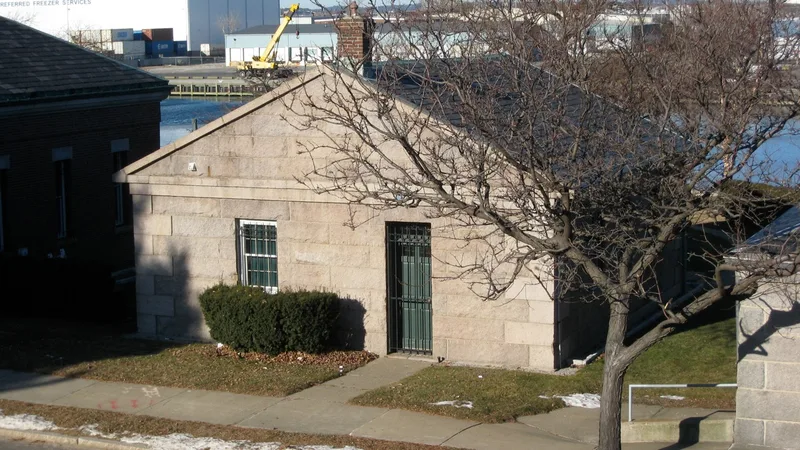
Naval Hospital Boston is a military medical campus on a hillside at 1 Broadway in Chelsea, overlooking the Mystic River. The district includes five buildings put up before 1858 and other structures from before 1920. Building 1, a Vermont granite hospital, opened on January 7, 1836, and was one of the first three hospitals authorized specifically for naval personnel, who had previously used Marine hospitals. Two granite magazine buildings date to about 1836, and Building 59, a brick Marine Hospital completed in 1857, later received a mansard roof and a fourth story. Quarters A, built in 1856, houses the commanding officer. The nomination describes it as the oldest naval hospital in continuous active service in the country. It also notes the site's earlier history, including Samuel Maverick's fortified house of 1625, the landing of the first ferry to Charlestown and Boston in 1631, and its role in the 1775 Bunker Hill period. The high, well-watered site was chosen for its healthful setting.
Machine-generated summary. This summary was generated by a language model from the official nomination document and has not been reviewed line by line by an editor. It may contain errors. Check the source document before relying on any detail. Source: nomination document (PDF) · catalog entry. Generated October 2026 (model claude-sonnet-5-5, prompt v1.0-2026-10-29).
| Areas of significance | Military, Health/Medicine |
|---|---|
| Acreage | 87.9 |
| Boundary source | NPS cultural-resource GIS polygon |
| Full listing page | Naval Hospital Boston Historic District (property record) |
What listing means for this property
This is a historic district. Buildings within its boundary are either contributing (they add to the district's significance) or non-contributing. Owners of contributing income-producing buildings can claim the 20% federal rehabilitation tax credit; homeowners should look at state credits. National Register districts impose no design review by themselves; a local historic district ordinance, if one exists, does (the difference explained).
General information, not legal or tax advice. Rules change; confirm with your State Historic Preservation Office or a qualified adviser.