Naumkeag

Why it's listed
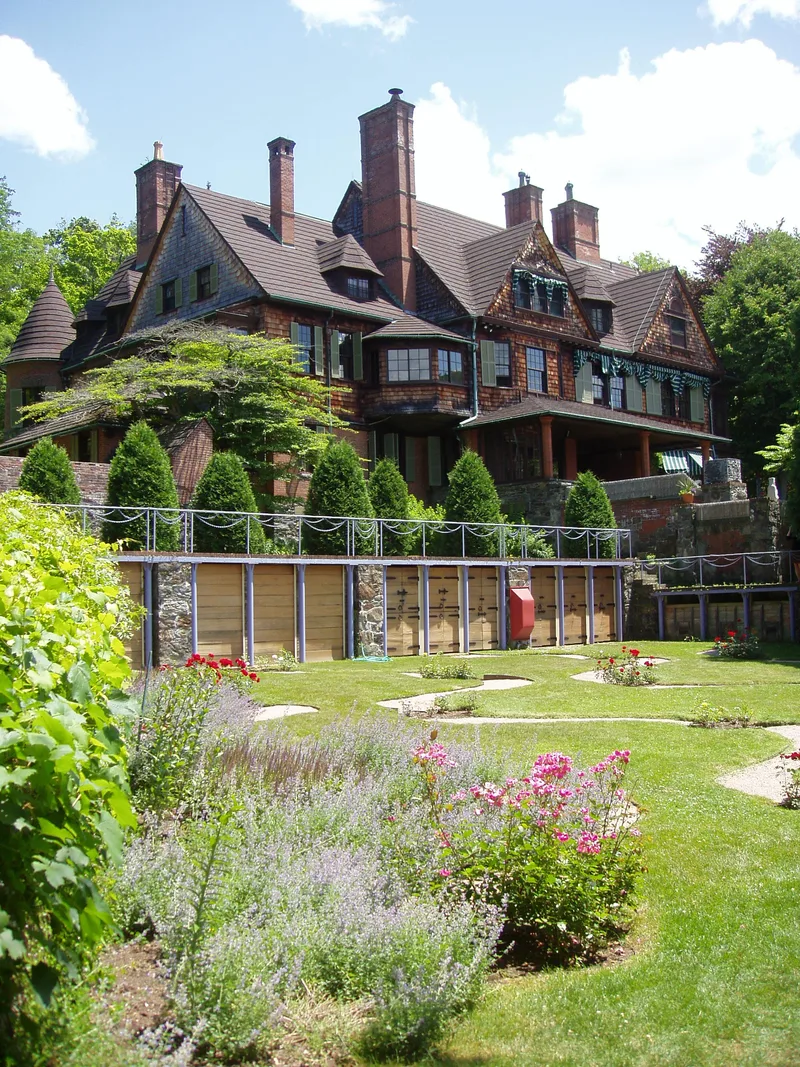
Naumkeag is a summer estate on the west side of Prospect Hill in Stockbridge, Massachusetts. Its 26-room mansion, completed in 1886 to designs by Stanford White, sits within 49 acres of terraced grounds facing Monument Mountain. The house is Queen Anne in character, with corner turrets, paneled brick chimneys, Palladian windows, and a mix of brick and patterned shingles. Inside, a central hall opens to rooms finished in differing styles, including oak paneling, mahogany, and California redwood. Joseph Hodges Choate, a prominent lawyer who later served as Ambassador to the Court of St. James, had it built. Landscape architect Nathaniel Barrett laid out the original terraces, and Fletcher Steele extended the gardens for Choate's daughter Mabel over thirty years. Features include the Afternoon Garden, a Chinese Garden, and a fountain by Frederick MacMonnies. Mabel Choate left the estate to the Trustees of Reservations in 1959, and it is open to the public.
Machine-generated summary. This summary was generated by a language model from the official nomination document and has not been reviewed line by line by an editor. It may contain errors. Check the source document before relying on any detail. Source: nomination document (PDF) · catalog entry. Generated October 2026 (model claude-sonnet-5-5, prompt v1.0-2026-10-29).
| Period of significance | 1886 |
|---|---|
| Styles | Queen Anne |
| Areas of significance | Landscape Architecture, Law, Politics/Government, Architecture |
| Acreage | 46 |
| Boundary source | NPS cultural-resource GIS polygon |
| Full listing page | Naumkeag (property record) |
What listing means for this property
This is a historic district. Buildings within its boundary are either contributing (they add to the district's significance) or non-contributing. Owners of contributing income-producing buildings can claim the 20% federal rehabilitation tax credit; homeowners should look at state credits. National Register districts impose no design review by themselves; a local historic district ordinance, if one exists, does (the difference explained).
General information, not legal or tax advice. Rules change; confirm with your State Historic Preservation Office or a qualified adviser.