Mount Pleasant Historic District

Why it's listed
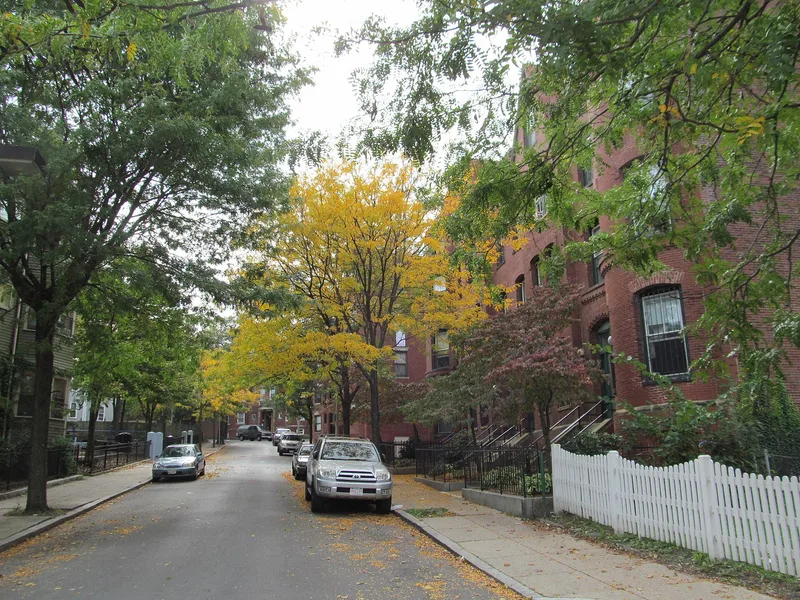
Mount Pleasant is a residential district in the Roxbury section of Boston, containing 99 contributing buildings erected between 1833 and 1925. The earliest buildings are wood-frame, detached houses set back from tree-lined streets, many of them vernacular Greek Revival double houses and side-hall cottages. Gothic Revival cottages, Italianate houses and Second Empire townhouses followed in the 1850s and 1860s. After horse railroads extended along Dudley Street and Boston annexed Roxbury in 1868, development became denser. Brick row houses, such as the ten-unit row at 80-98 Mt. Pleasant Ave., and apartment hotels like Hotel Vine and Hotel Mount Pleasant brought the idea of horizontal apartments, or French flats, to the area. Yellow-brick apartment blocks of the 1890s and a brick mansion built for Thomas Ray in 1886 add further variety. The district is listed for its concentration of mid-nineteenth-century house types and for showing how a suburban neighborhood grew into a dense urban one. Most buildings are well maintained, though some are vacant or in poor condition.
Machine-generated summary. This summary was generated by a language model from the official nomination document and has not been reviewed line by line by an editor. It may contain errors. Check the source document before relying on any detail. Source: nomination document (PDF) · catalog entry. Generated October 2026 (model claude-sonnet-5-5, prompt v1.0-2026-10-29).
| Period of significance | 1833-1925 |
|---|---|
| Styles | Multiple styles, including Greek Revival, Gothic Revival, Italianate, Second Empire and Shingle Style |
| Areas of significance | Community Planning and Development, Architecture |
| Acreage | 170 |
| Boundary source | NPS cultural-resource GIS polygon |
| Full listing page | Mount Pleasant Historic District (property record) |
What listing means for this property
This is a historic district. Buildings within its boundary are either contributing (they add to the district's significance) or non-contributing. Owners of contributing income-producing buildings can claim the 20% federal rehabilitation tax credit; homeowners should look at state credits. National Register districts impose no design review by themselves; a local historic district ordinance, if one exists, does (the difference explained).
General information, not legal or tax advice. Rules change; confirm with your State Historic Preservation Office or a qualified adviser.