Monument Square-Eagle Street Historic District (Boundary Increase)

Why it's listed
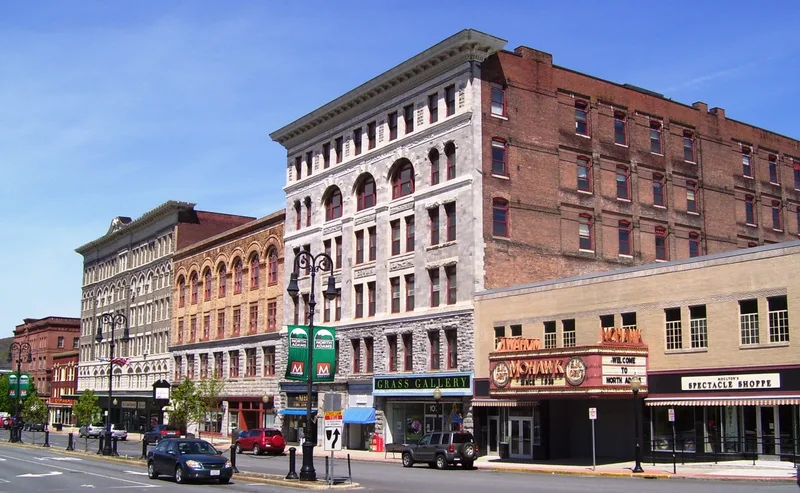
This boundary increase extends the Monument Square-Eagle Street district in North Adams, covering the historic central business district. It adds a row of commercial buildings on the north side of Main Street, along with churches, a post office and a school on Summer, Eagle and North Church Streets. Highlights include the Italianate First Blackinton Block (1873), the Romanesque Revival Hoosac Savings Bank, the Dowlin and Kimball buildings, and the Art Deco Mohawk Theater of 1938, built during the Depression and still a working movie theater. Churches include the Gothic Revival St. John's Episcopal and St. Francis Roman Catholic, and the Georgian Revival Post Office dates from 1911. The buildings were largely erected by local developers and merchants when the city's mills were thriving and its population peaked near 24,200 in 1900. The district is described as retaining its integrity and as meeting criteria A and C. Its boundaries exclude areas on the south side of Main Street altered by urban renewal. All buildings remain in their original uses.
Machine-generated summary. This summary was generated by a language model from the official nomination document and has not been reviewed line by line by an editor. It may contain errors. Check the source document before relying on any detail. Source: nomination document (PDF) · catalog entry. Generated October 2026 (model claude-sonnet-5-5, prompt v1.0-2026-10-29).
| Period of significance | 1850-1938 |
|---|---|
| Styles | Italianate, Romanesque Revival, Gothic Revival, Georgian Revival, Renaissance Revival and Art Deco |
| Areas of significance | Commerce, Architecture |
| Acreage | 200 |
| Boundary source | NPS cultural-resource GIS polygon |
| Full listing page | Monument Square-Eagle Street Historic District (Boundary Increase) (property record) |
What listing means for this property
This is a historic district. Buildings within its boundary are either contributing (they add to the district's significance) or non-contributing. Owners of contributing income-producing buildings can claim the 20% federal rehabilitation tax credit; homeowners should look at state credits. National Register districts impose no design review by themselves; a local historic district ordinance, if one exists, does (the difference explained).
General information, not legal or tax advice. Rules change; confirm with your State Historic Preservation Office or a qualified adviser.