Montague Center Historic District

Why it's listed
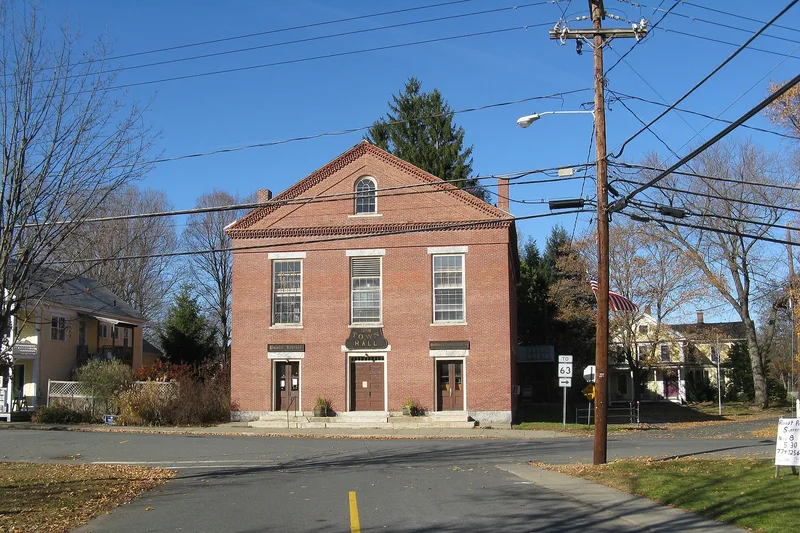
Montague Center is a Connecticut River valley village in Franklin County, Massachusetts, laid out around a triangular green and a quarter-mile Main Street. It grew up around a waterfall on the Sawmill River, where mills operated from the early 1700s and where the Alvah Stone Mill still stands. The village prospered most between 1830 and 1850, and Greek Revival architecture defines its character. The 1834 brick First Congregational Church, the Unitarian Church of the same year, the 1858 Town Hall and houses such as the Delano and Ward houses show the style, often shaped by Asher Benjamin's pattern books. Earlier buildings include the ca. 1735 Root Tavern and the Federal-style brick Aaron Gate House of about 1805. An 1889 fire destroyed many factories and homes near South Street. The district is recognized as a well-preserved small New England village, and it may also hold archaeological evidence of Native American settlement and early mill sites.
Machine-generated summary. This summary was generated by a language model from the official nomination document and has not been reviewed line by line by an editor. It may contain errors. Check the source document before relying on any detail. Source: nomination document (PDF) · catalog entry. Generated October 2026 (model claude-sonnet-5-5, prompt v1.0-2026-10-29).
| Styles | Greek Revival, Gothic Revival, Colonial Revival, Bungalow/Craftsman, Colonial, Early Republic |
|---|---|
| Areas of significance | Architecture, Commerce, Community Planning and Development, Industry |
| Acreage | 170 |
| Boundary source | NPS cultural-resource GIS polygon |
| Full listing page | Montague Center Historic District (property record) |
What listing means for this property
This is a historic district. Buildings within its boundary are either contributing (they add to the district's significance) or non-contributing. Owners of contributing income-producing buildings can claim the 20% federal rehabilitation tax credit; homeowners should look at state credits. National Register districts impose no design review by themselves; a local historic district ordinance, if one exists, does (the difference explained).
General information, not legal or tax advice. Rules change; confirm with your State Historic Preservation Office or a qualified adviser.