Millis Center Historic District

Why it's listed
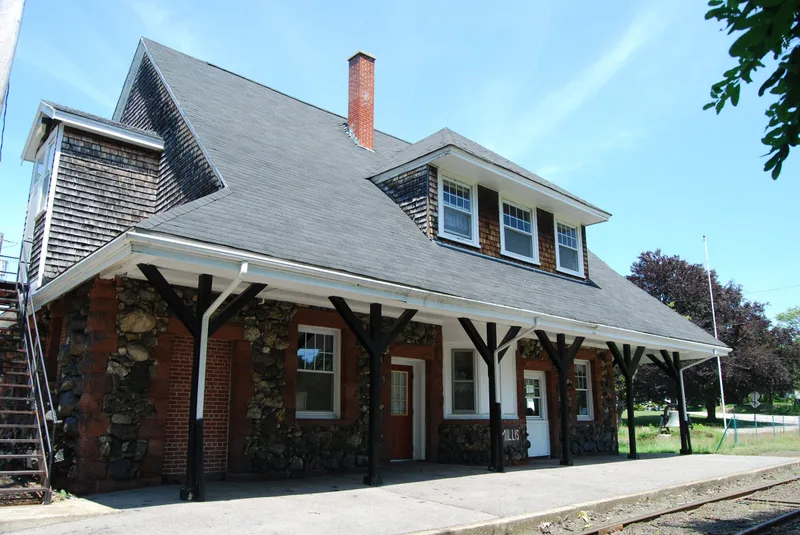
Millis Center is the historic core of the town of Millis, Massachusetts, a compact neighborhood of modest houses, two factory complexes, a rail line, and civic buildings north of Main Street. Most buildings are wood-frame dwellings from the mid 19th to early 20th centuries, though a center-chimney Georgian house from about 1750 survives. Italianate houses from the 1850s to 1870s, the elaborate 1887 Rocklawn house designed by Boston architect Frank W. Weston, and rows of gable-front cottages built for factory workers in the 1890s show how the village grew. The Millis Company financed about 60 cottages, and streets such as Lavender and Irving were laid out for employees. The railroad, the 1886 station, and spurs serving the factories tied the community to industry. Churches, the former Memorial School now used as town offices, an American Legion hall, Memorial Park, and a stone bandstand complete the village center. Of 219 resources, 171 are counted as contributing.
Machine-generated summary. This summary was generated by a language model from the official nomination document and has not been reviewed line by line by an editor. It may contain errors. Check the source document before relying on any detail. Source: nomination document (PDF) · catalog entry. Generated October 2026 (model claude-sonnet-5-5, prompt v1.0-2026-10-29).
| Styles | Colonial: Georgian; Greek Revival, Gothic Revival; Late Victorian: Gothic, Italianate, Queen Anne; Colonial Revival; Bungalow; mixed |
|---|---|
| Areas of significance | Community Planning and Development, Architecture, Social History |
| Acreage | 110 |
| Boundary source | NPS cultural-resource GIS polygon |
| Full listing page | Millis Center Historic District (property record) |
What listing means for this property
This is a historic district. Buildings within its boundary are either contributing (they add to the district's significance) or non-contributing. Owners of contributing income-producing buildings can claim the 20% federal rehabilitation tax credit; homeowners should look at state credits. National Register districts impose no design review by themselves; a local historic district ordinance, if one exists, does (the difference explained).
General information, not legal or tax advice. Rules change; confirm with your State Historic Preservation Office or a qualified adviser.