Mill River Historic District

Why it's listed
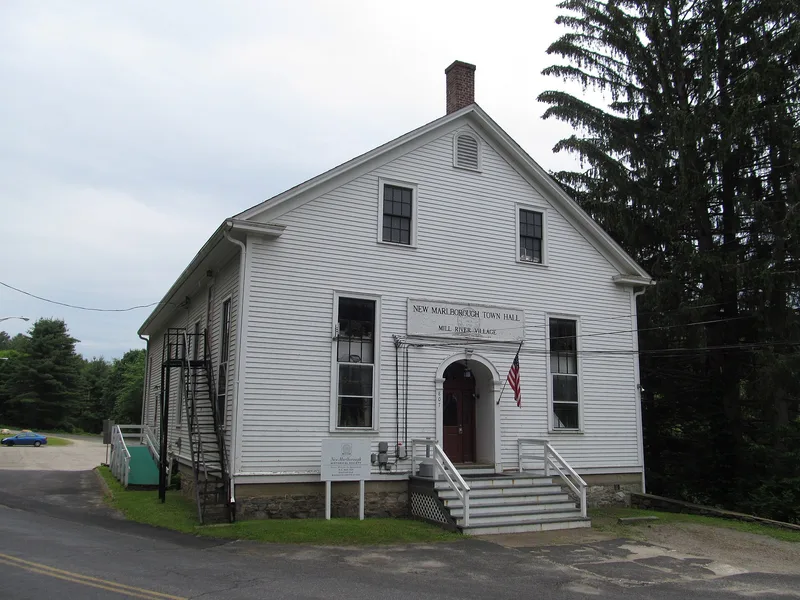
Mill River is a linear village along the Konkapot River in New Marlborough, Berkshire County, Massachusetts. Its district covers roughly 425 acres and includes 92 contributing buildings and 11 sites. The river drops 129 feet through the village and powered eleven dams and mills in the nineteenth century, producing grist, lumber and paper. Eight of the mill sites remain visible as archaeological remains. Most buildings are wood-frame houses in a restrained Greek Revival style, built mainly around 1850 to 1870 for mill owners and workers. A few Gothic Revival, Italianate and Queen Anne houses were built for prominent residents, and two Romanesque Revival churches date from the 1860s and 1870. The town hall, library and school reflect classical design. The railroad bypassed the village, the paper industry declined by the century's end, and the last mill was dismantled during World War II. The village remains largely intact, with a general store and post office still operating, and it records the area's industrial and civic past.
Machine-generated summary. This summary was generated by a language model from the official nomination document and has not been reviewed line by line by an editor. It may contain errors. Check the source document before relying on any detail. Source: nomination document (PDF) · catalog entry. Generated October 2026 (model claude-sonnet-5-5, prompt v1.0-2026-10-29).
| Styles | Federal, Greek Revival, Gothic Revival, Italianate, Queen Anne, Classical Revival |
|---|---|
| Areas of significance | Architecture, Industry, Politics/Government, Agriculture, Exploration/Settlement |
| Acreage | 425 |
| Boundary source | NPS cultural-resource GIS polygon |
| Full listing page | Mill River Historic District (property record) |
What listing means for this property
This is a historic district. Buildings within its boundary are either contributing (they add to the district's significance) or non-contributing. Owners of contributing income-producing buildings can claim the 20% federal rehabilitation tax credit; homeowners should look at state credits. National Register districts impose no design review by themselves; a local historic district ordinance, if one exists, does (the difference explained).
General information, not legal or tax advice. Rules change; confirm with your State Historic Preservation Office or a qualified adviser.