Middlesex Fells Reservoirs Historic District

Why it's listed
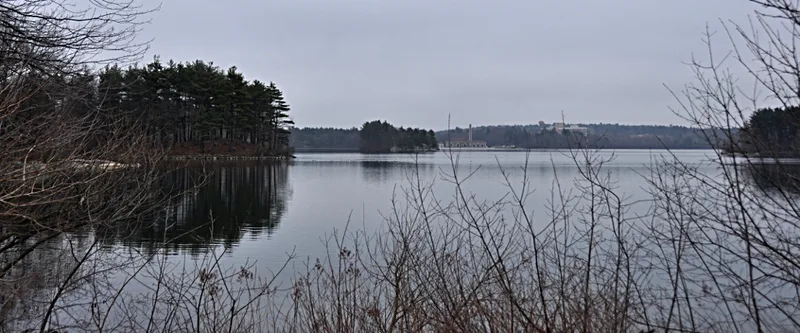
Three separate reservoir complexes in the Middlesex Fells Reservation of Stoneham and Medford make up this water supply district north of Boston. Spot Pond, the largest, was first developed by the City of Boston around 1869-1870, then enlarged by the Metropolitan Water Board from 1898. It includes a Classical Revival pumping station of gray Roman brick, two gatehouses, a superintendent's house and a stone barn. Middlesex Fells Reservoir, begun in 1898, and Bear Hill Reservoir, finished in 1902-1903, extended the supply to growing communities, including Stoneham after 1901. The gatehouses and pumping station were designed by Shepley, Rutan and Coolidge, and the Olmsted firm shaped the surrounding landscape so the works would suit the park. The reservoirs remain much as first built, apart from a 1975 fire at the pumping station and a third basin added in the 1940s. The district was listed for its role in the metropolitan water system and for its architecture.
Machine-generated summary. This summary was generated by a language model from the official nomination document and has not been reviewed line by line by an editor. It may contain errors. Check the source document before relying on any detail. Source: nomination document (PDF) · catalog entry. Generated October 2026 (model claude-sonnet-5-5, prompt v1.0-2026-10-29).
| Period of significance | 1870-1926 |
|---|---|
| Styles | Classical Revival (Spot Pond Pumping Station); Italianate (Bottume House) |
| Areas of significance | Community Planning and Development, Engineering, Politics/Government, Architecture |
| Acreage | 320 |
| Boundary source | NPS cultural-resource GIS polygon |
| Full listing page | Middlesex Fells Reservoirs Historic District (property record) |
What listing means for this property
This is a historic district. Buildings within its boundary are either contributing (they add to the district's significance) or non-contributing. Owners of contributing income-producing buildings can claim the 20% federal rehabilitation tax credit; homeowners should look at state credits. National Register districts impose no design review by themselves; a local historic district ordinance, if one exists, does (the difference explained).
General information, not legal or tax advice. Rules change; confirm with your State Historic Preservation Office or a qualified adviser.