Middlesex Fells Reservation Parkways

Why it's listed
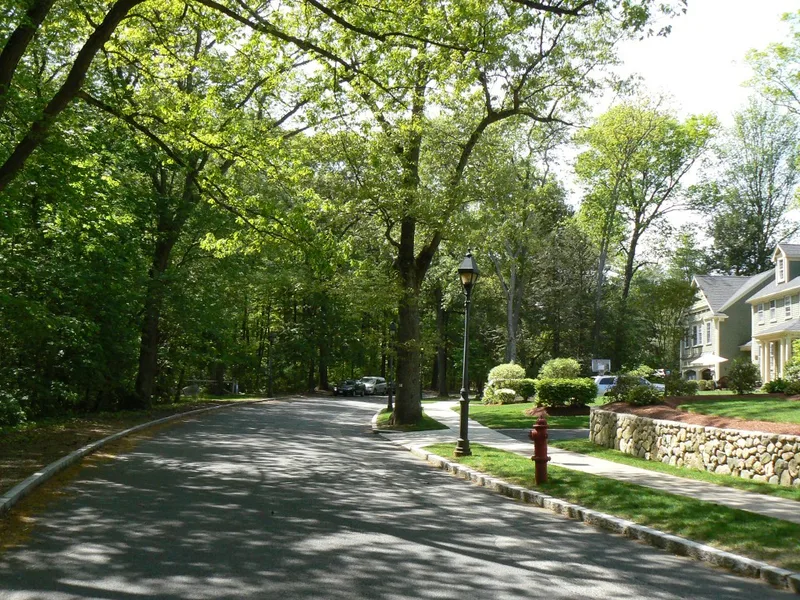
Ten road segments around and through the Middlesex Fells Reservation make up this parkway district, spanning Malden, Medford, Melrose, Stoneham and Winchester. They include East Border Road, Fellsway East, Fellsway West, Hillcrest Parkway, South Street, Pond Street, South Border Road, Ravine Road, and Woodland Road with Elm Street. Landscape architect Charles Eliot proposed border roads in the 1890s to mark reservation edges and keep neighboring development from harming the park. Building began in 1896, and several routes followed older roads that were improved or realigned. Fellsway West and Fellsway East were extended or rebuilt in the early 1930s. Most roads are simple two-lane paved routes about 24 to 30 feet wide, with granite curbing, small miters, and in places medians and rotaries. Woodrow Road, as the busiest road, has landscaped medians. Wooded slopes, rock outcrops, and views of Spot Pond and other water bodies define the setting. Interstate 93 in the 1960s cut off North Border Road and altered the northern Fellsway West, which are left out.
Machine-generated summary. This summary was generated by a language model from the official nomination document and has not been reviewed line by line by an editor. It may contain errors. Check the source document before relying on any detail. Source: nomination document (PDF) · catalog entry. Generated October 2026 (model claude-sonnet-5-5, prompt v1.0-2026-10-29).
| Areas of significance | Community Planning and Development, Conservation, Engineering, Entertainment/Recreation, Landscape Architecture, Transportation |
|---|---|
| Boundary source | NPS cultural-resource GIS polygon |
| Full listing page | Middlesex Fells Reservation Parkways (property record) |
What listing means for this property
This is a historic district. Buildings within its boundary are either contributing (they add to the district's significance) or non-contributing. Owners of contributing income-producing buildings can claim the 20% federal rehabilitation tax credit; homeowners should look at state credits. National Register districts impose no design review by themselves; a local historic district ordinance, if one exists, does (the difference explained).
General information, not legal or tax advice. Rules change; confirm with your State Historic Preservation Office or a qualified adviser.