Middlefield Center Historic District

Why it's listed
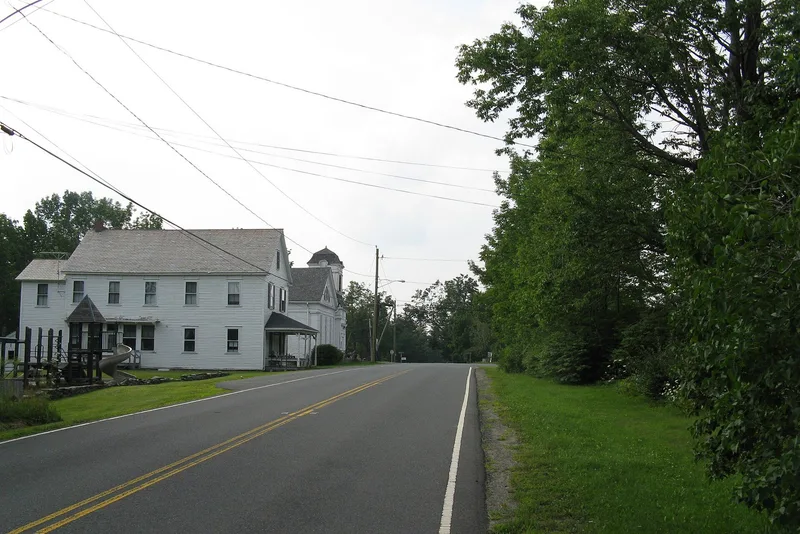
Middlefield Center is the historic heart of a hill town in the Berkshire foothills of Hampshire County, Massachusetts. The district runs mainly along Skyline Trail, with Bell Road and Town Hill Road crossing it to form a core of church, store, old town hall and closely spaced houses. Farther out, homes are set among fields and woodland, with long views west toward the Berkshires. Development began after the town's 1783 incorporation, so the earliest surviving buildings are Federal in style, including houses with reeded corner pilasters, a rare detail in the region. Greek Revival, Italianate, Queen Anne, Colonial Revival and Craftsman buildings followed. The Mack General Store, a Congregational church assembled from buildings of different periods, the Mack Cemetery and the agricultural fairgrounds with its 1859 hall show how commerce, worship and farming shaped the village. The district contains 54 contributing resources, and the fair has run nearly every year since the 1850s.
Machine-generated summary. This summary was generated by a language model from the official nomination document and has not been reviewed line by line by an editor. It may contain errors. Check the source document before relying on any detail. Source: nomination document (PDF) · catalog entry. Generated October 2026 (model claude-sonnet-5-5, prompt v1.0-2026-10-29).
| Styles | Federal, Greek Revival, Italianate, Queen Anne, Colonial Revival, Craftsman; mixed |
|---|---|
| Areas of significance | Agriculture, Architecture, Community Planning and Development |
| Acreage | 292 |
| Boundary source | NPS cultural-resource GIS polygon |
| Full listing page | Middlefield Center Historic District (property record) |
What listing means for this property
This is a historic district. Buildings within its boundary are either contributing (they add to the district's significance) or non-contributing. Owners of contributing income-producing buildings can claim the 20% federal rehabilitation tax credit; homeowners should look at state credits. National Register districts impose no design review by themselves; a local historic district ordinance, if one exists, does (the difference explained).
General information, not legal or tax advice. Rules change; confirm with your State Historic Preservation Office or a qualified adviser.