Middlefield-Becket Stone Arch Railroad Bridge District

Why it's listed
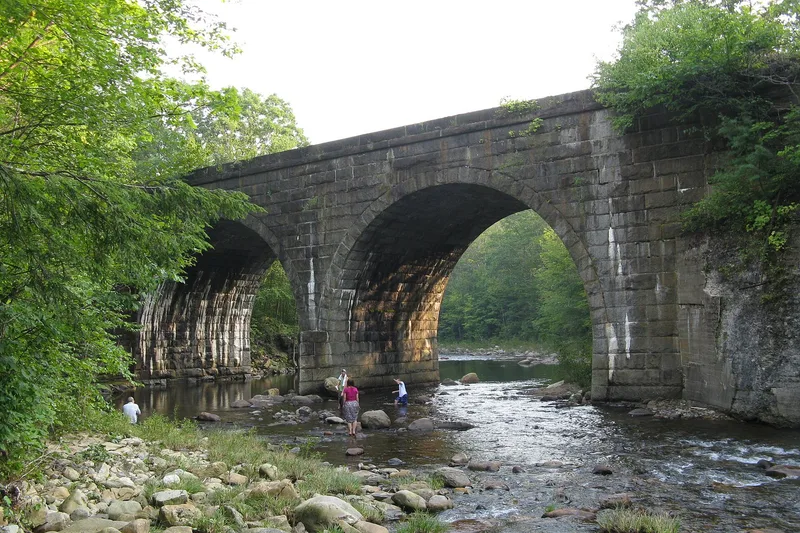
Ten railroad bridges and their right-of-way span a 3.7 mile stretch of the West Branch of the Westfield River between Middlefield and Becket, passing through Chester. Nine are masonry and one is a steel deck truss girder. The three oldest, granite single-arch bridges from 1840-41, were built by the Western Railroad for a single track and rise about 70 feet above the water. Later bridges include a double granite arch from about 1866, a hybrid granite and concrete bridge widened in 1912, and reinforced concrete arches from 1912, 1913 and 1928. Two of the 1928 spans replaced stone bridges damaged in the 1927 flood. The district is significant for engineering and for its link to the Western Railroad, part of the first trunk line completed in the United States. Chief Engineer George Washington Whistler supervised construction through the rugged Summit Division, the most difficult and expensive section of the line. The bridges show the progression from stone to concrete construction.
Machine-generated summary. This summary was generated by a language model from the official nomination document and has not been reviewed line by line by an editor. It may contain errors. Check the source document before relying on any detail. Source: nomination document (PDF) · catalog entry. Generated October 2026 (model claude-sonnet-5-5, prompt v1.0-2026-10-29).
| Period of significance | 1840-1928 |
|---|---|
| Areas of significance | Engineering, Transportation |
| Boundary source | NPS cultural-resource GIS polygon |
| Full listing page | Middlefield-Becket Stone Arch Railroad Bridge District (property record) |
What listing means for this property
This is a historic district. Buildings within its boundary are either contributing (they add to the district's significance) or non-contributing. Owners of contributing income-producing buildings can claim the 20% federal rehabilitation tax credit; homeowners should look at state credits. National Register districts impose no design review by themselves; a local historic district ordinance, if one exists, does (the difference explained).
General information, not legal or tax advice. Rules change; confirm with your State Historic Preservation Office or a qualified adviser.