Middleborough Waterworks

The National Park Service has not published a boundary polygon for this district; the map shows the listed properties inside it and the district's reference point.
Why it's listed
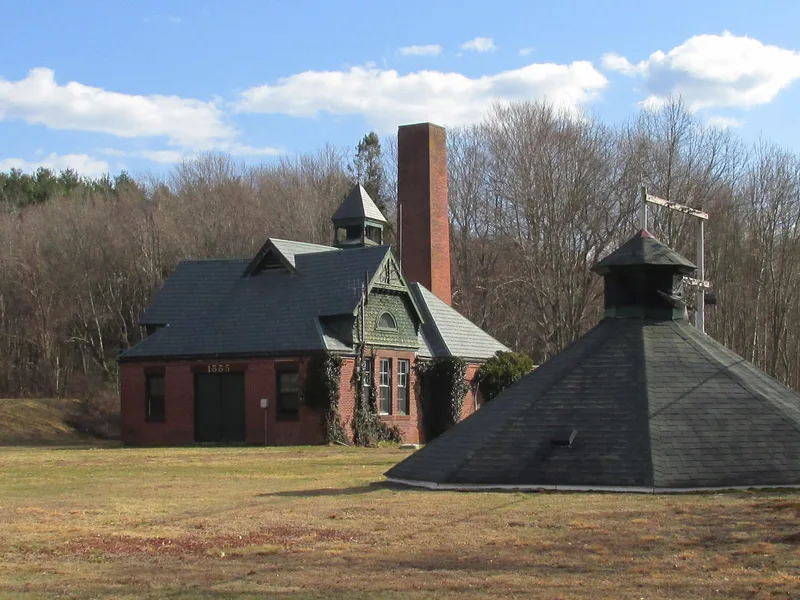
Middleborough Waterworks is a two-part complex that supplied the town's water. Beside the Nemasket River stand an 1885 brick pumping station in the Queen Anne style, designed by Boston architect Ernest N. Boyden, and a stone- and brick-lined well designed by engineer Percy M. Blake. A 1913 deferrization plant, designed by Robert Spurr Weston, was added to remove excess iron from the water using aeration and coke filtration. On Barden Hill, a 162-foot reinforced concrete tower tank was built in 1915 to a design by George A. Sampson. The system was created after insurance rates rose sharply in 1883 because the town lacked water, and it helped the town grow and its industries expand. The iron-removal plant is among the earliest in the United States and still operates with few changes. The tower tank, the first of its material in Massachusetts, has been out of service since 1970 and has suffered concrete cracking and balcony collapse.
Machine-generated summary. This summary was generated by a language model from the official nomination document and has not been reviewed line by line by an editor. It may contain errors. Check the source document before relying on any detail. Source: nomination document (PDF) · catalog entry. Generated October 2026 (model claude-sonnet-5-5, prompt v1.0-2026-10-29).
| Period of significance | 1885 - 1921 |
|---|---|
| Styles | Queen Anne; No Style |
| Areas of significance | Community Planning and Development, Engineering, Architecture |
| Acreage | 8.5 |
| Boundary source | not published |
| Full listing page | Middleborough Waterworks (property record) |
What listing means for this property
This is a historic district. Buildings within its boundary are either contributing (they add to the district's significance) or non-contributing. Owners of contributing income-producing buildings can claim the 20% federal rehabilitation tax credit; homeowners should look at state credits. National Register districts impose no design review by themselves; a local historic district ordinance, if one exists, does (the difference explained).
General information, not legal or tax advice. Rules change; confirm with your State Historic Preservation Office or a qualified adviser.