Memorial Drive Apartments Historic District

Why it's listed
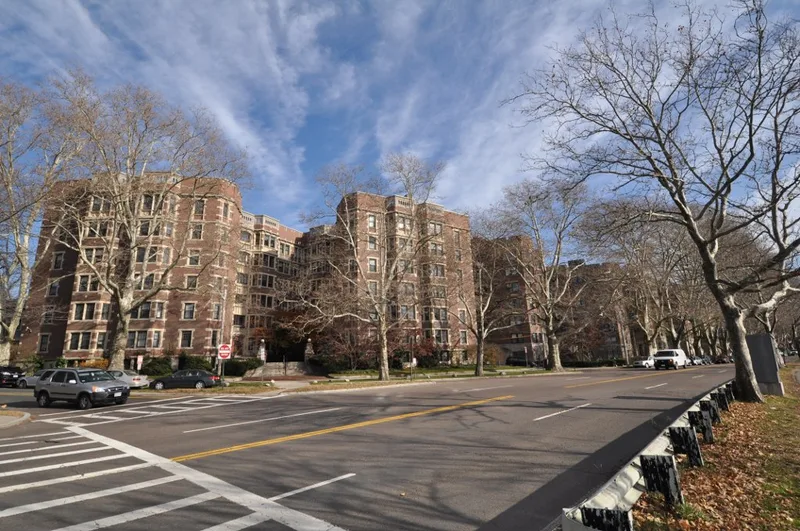
Four brick apartment buildings at 983-993 Memorial Drive in Cambridge form a riverside group of luxury housing built between 1914 and 1924. Strathcona-on-the-Charles (1914, W.L. Mowll) came first, with Elizabethan-style details and a plan that follows the curving site. Radnor Hall and Hampstead Hall (1916, Charles R. Greco) followed as Georgian Revival buildings with cast stone first stories and trim, and Barrington Court (1924, R.B. Whitten) completed the group with an unusually deep courtyard. Each is organized around a courtyard, a type introduced locally by Ralph Adams Cram in Brookline in 1898. The land had little development potential until Memorial Drive, designed by Charles Eliot, was completed in the late 1890s. The buildings face the Charles River and turn away from the working-class neighborhood to the northeast. Similar courtyards, brick, stone ornament and uniform height make them look like one complex, and together they were judged the most impressive concentration of apartment buildings in Cambridge, significant for architecture.
Machine-generated summary. This summary was generated by a language model from the official nomination document and has not been reviewed line by line by an editor. It may contain errors. Check the source document before relying on any detail. Source: nomination document (PDF) · catalog entry. Generated October 2026 (model claude-sonnet-5-5, prompt v1.0-2026-10-29).
| Period of significance | 1914-1924 |
|---|---|
| Styles | Neo-Georgian and Neo-Tudor (courtyard-type apartment buildings) |
| Areas of significance | Architecture |
| Acreage | 1.8 |
| Boundary source | NPS cultural-resource GIS polygon |
| Full listing page | Memorial Drive Apartments Historic District (property record) |
What listing means for this property
This is a historic district. Buildings within its boundary are either contributing (they add to the district's significance) or non-contributing. Owners of contributing income-producing buildings can claim the 20% federal rehabilitation tax credit; homeowners should look at state credits. National Register districts impose no design review by themselves; a local historic district ordinance, if one exists, does (the difference explained).
General information, not legal or tax advice. Rules change; confirm with your State Historic Preservation Office or a qualified adviser.