Medway Village Historic District

Why it's listed
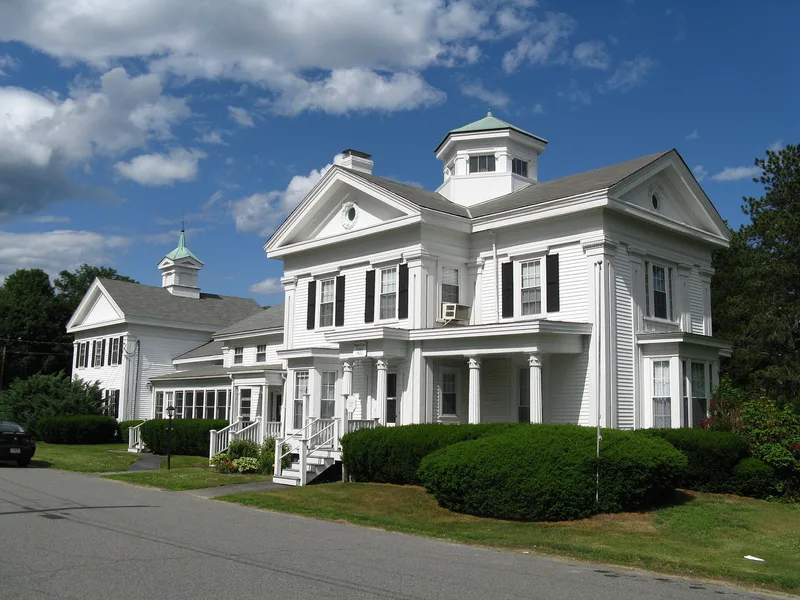
Medway Village, once called Factory Village, sits on the falls of the Charles River in the southeast corner of Medway, Massachusetts. The historic district covers about 60 acres and includes 289 buildings, a bridge, a dam and several objects. Small textile mills began the village's growth at the end of the 18th century, and industry kept expanding through the 19th century, peaking in the third quarter. Most of the mills are gone. The Italianate Sanford Mills complex of 1881, now condominiums, is the main survivor. Houses along Village and Holliston streets show common New England forms, including ell houses, double houses and Greek Revival end houses. Civic and religious buildings cluster at the center: the 1912 Sanford Hall town hall, the 1836 Greek Revival Village Evangelical Congregational Church, Gothic Revival St. Joseph's Church, and Christ Episcopal Church designed by Steven Earle. The district is now mostly residential, with a few small businesses.
Machine-generated summary. This summary was generated by a language model from the official nomination document and has not been reviewed line by line by an editor. It may contain errors. Check the source document before relying on any detail. Source: nomination document (PDF) · catalog entry. Generated October 2026 (model claude-sonnet-5-5, prompt v1.0-2026-10-29).
| Styles | Colonial/Georgian, Federal, Greek Revival, Gothic Revival, Italianate, Queen Anne, Renaissance, Colonial Revival, Classical Revival, Bungalow/Craftsman |
|---|---|
| Areas of significance | Architecture, Commerce, Community Planning and Development, Industry, Social History |
| Acreage | 60 |
| Boundary source | NPS cultural-resource GIS polygon |
| Full listing page | Medway Village Historic District (property record) |
What listing means for this property
This is a historic district. Buildings within its boundary are either contributing (they add to the district's significance) or non-contributing. Owners of contributing income-producing buildings can claim the 20% federal rehabilitation tax credit; homeowners should look at state credits. National Register districts impose no design review by themselves; a local historic district ordinance, if one exists, does (the difference explained).
General information, not legal or tax advice. Rules change; confirm with your State Historic Preservation Office or a qualified adviser.