Mechanics Block Historic District (Boundary Increase)

Why it's listed
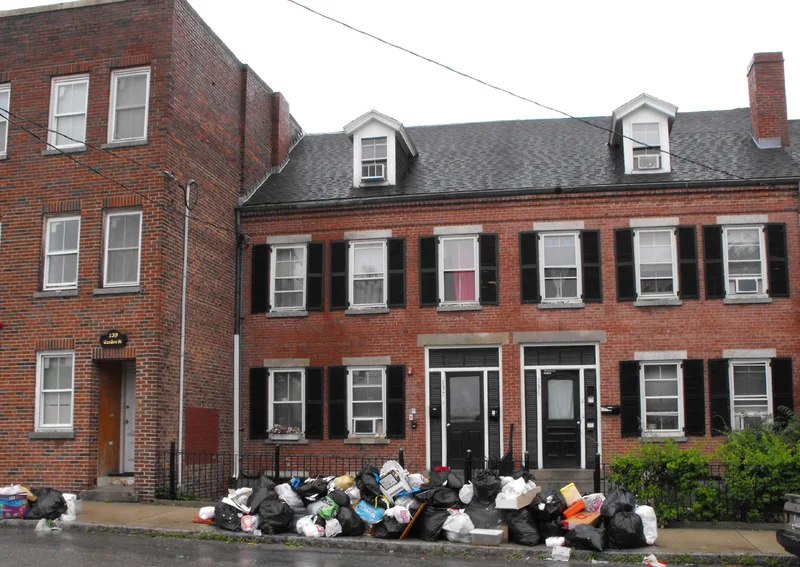
Eight attached brick rowhouses at 38-52 Union Street in Lawrence, Massachusetts, form the eastern end of the Mechanics Block and were added to the existing historic district. The Essex Company, founder of the city, built the single-family houses in 1847 for mechanics employed in its machine shop. They are typically 2½ stories, three bays wide, with granite lintels and sills, paired doorways with sidelights and transoms, and rear ells for kitchens. Deed restrictions reserved the houses for skilled craftsmen of the Lawrence Machine Company, and later owners such as the Everett Mills and Washington Mills kept that tradition. Over time the occupants shifted from English, Scottish and native-born workers to Irish and eventually Italian-American families. Some alterations have occurred, including new roofing, removed chimneys and a storefront. The block is valued as an example of New England factory housing, and the addition preserves the design integrity of the district.
Machine-generated summary. This summary was generated by a language model from the official nomination document and has not been reviewed line by line by an editor. It may contain errors. Check the source document before relying on any detail. Source: nomination document (PDF) · catalog entry. Generated October 2026 (model claude-sonnet-5-5, prompt v1.0-2026-10-29).
| Period of significance | 1800-1899 |
|---|---|
| Areas of significance | Industry, Commerce, Architecture |
| Acreage | 0.4 |
| Boundary source | NPS cultural-resource GIS polygon |
| Full listing page | Mechanics Block Historic District (Boundary Increase) (property record) |
What listing means for this property
This is a historic district. Buildings within its boundary are either contributing (they add to the district's significance) or non-contributing. Owners of contributing income-producing buildings can claim the 20% federal rehabilitation tax credit; homeowners should look at state credits. National Register districts impose no design review by themselves; a local historic district ordinance, if one exists, does (the difference explained).
General information, not legal or tax advice. Rules change; confirm with your State Historic Preservation Office or a qualified adviser.