McIntosh Corner Historic District

Why it's listed
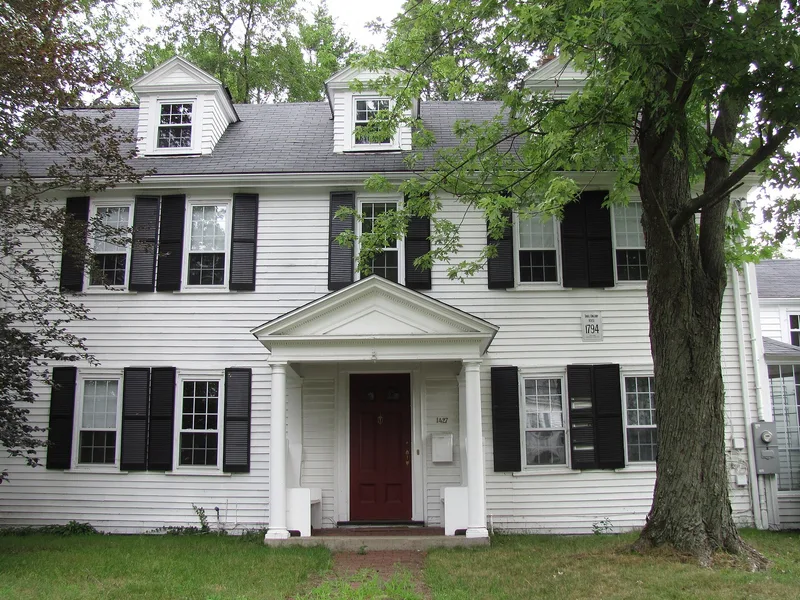
McIntosh Corner is an eleven-acre cluster of mostly residential buildings at the crossing of Great Plain and Central Avenues in Needham, Massachusetts. The oldest surviving house dates from 1794, and most others are five-bay, two-and-one-half-story wooden dwellings with Federal or Greek Revival detail. Later Italianate, Colonial Revival and bungalow-style buildings extend the story to 1914. In the early 1800s the corner served as Needham's town center, anchored by the McIntosh Tavern, a stagecoach stop built in 1810 that burned in 1844. Houses here also held stores, a post office and small home industries such as glue making and dressmaking. After the railroad bypassed the corner in 1853, commerce shifted to Needham Village and the area became a residential suburb. The district includes fifteen contributing buildings and Noyes Park, created in 1913. It was recognized for its architecture and for what it shows about the growth of a transportation-based community.
Machine-generated summary. This summary was generated by a language model from the official nomination document and has not been reviewed line by line by an editor. It may contain errors. Check the source document before relying on any detail. Source: nomination document (PDF) · catalog entry. Generated October 2026 (model claude-sonnet-5-5, prompt v1.0-2026-10-29).
| Period of significance | 1794-1914 |
|---|---|
| Styles | Federal, Greek Revival, Italianate, Colonial Revival and Bungalow (vernacular forms) |
| Areas of significance | Community Planning and Development, Architecture |
| Acreage | 11.1 |
| Boundary source | NPS cultural-resource GIS polygon |
| Full listing page | McIntosh Corner Historic District (property record) |
What listing means for this property
This is a historic district. Buildings within its boundary are either contributing (they add to the district's significance) or non-contributing. Owners of contributing income-producing buildings can claim the 20% federal rehabilitation tax credit; homeowners should look at state credits. National Register districts impose no design review by themselves; a local historic district ordinance, if one exists, does (the difference explained).
General information, not legal or tax advice. Rules change; confirm with your State Historic Preservation Office or a qualified adviser.