Massachusetts Mental Health Center

Why it's listed
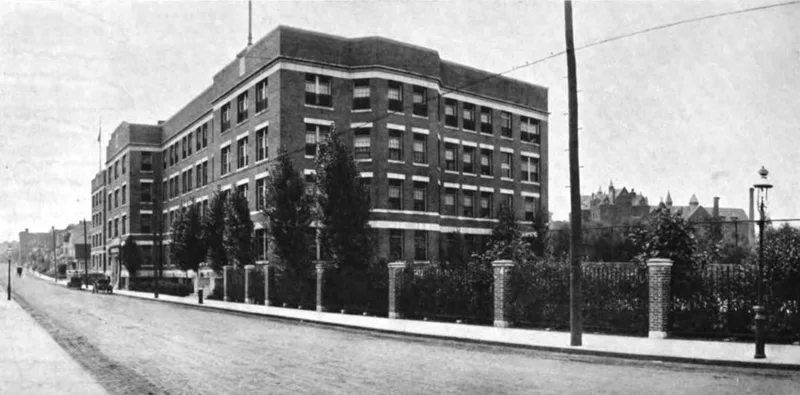
Massachusetts Mental Health Center, at 74 Fenwood Road in Boston, opened on June 24, 1912, as the Psychopathic Department of Boston State Hospital. Kendall, Taylor & Co. designed the red-brick, E-shaped Main Building with Gothic Revival entry details, along with a freestanding power plant. Later additions include a 1954 Research Building, a 1957 Therapeutic Building and a 1963 attic story. The hospital was conceived as a general hospital for the mentally ill, with small wards, outpatient and social services, laboratories and hydrotherapy facilities. Its site near the medical schools broke with the nineteenth-century practice of placing mental hospitals in the countryside. Its stated purposes were observation, treatment and research, modeled on German psychiatric clinics. It became the separate Boston Psychopathic Hospital in 1920 and took its present name in 1956. Its pioneering role in psychiatric research and treatment, and its intact design, underlie its significance from 1912 to 1940.
Machine-generated summary. This summary was generated by a language model from the official nomination document and has not been reviewed line by line by an editor. It may contain errors. Check the source document before relying on any detail. Source: nomination document (PDF) · catalog entry. Generated October 2026 (model claude-sonnet-5-5, prompt v1.0-2026-10-29).
| Period of significance | 1912-1940 |
|---|---|
| Styles | Late 19th/20th Revivals: Late Gothic Revival |
| Areas of significance | Architecture, Health/Medicine, Social History |
| Acreage | 2 |
| Boundary source | NPS cultural-resource GIS polygon |
| Full listing page | Massachusetts Mental Health Center (property record) |
What listing means for this property
This is a historic district. Buildings within its boundary are either contributing (they add to the district's significance) or non-contributing. Owners of contributing income-producing buildings can claim the 20% federal rehabilitation tax credit; homeowners should look at state credits. National Register districts impose no design review by themselves; a local historic district ordinance, if one exists, does (the difference explained).
General information, not legal or tax advice. Rules change; confirm with your State Historic Preservation Office or a qualified adviser.