Massachusetts Avenue Historic District

Why it's listed
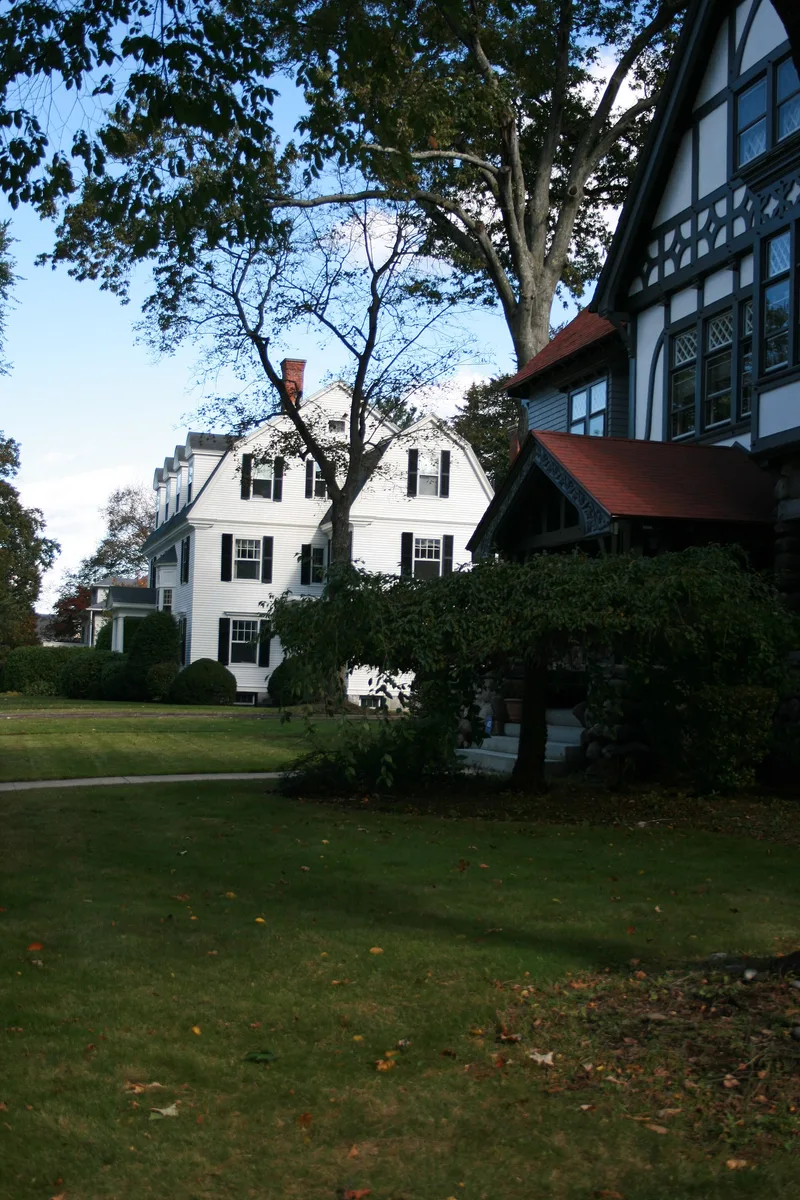
Massachusetts Avenue in Worcester is a single block of eleven houses between Salisbury Street and Drury Lane, divided by a thirty-foot grassy mall and shaded by tall trees. Ten of the houses went up between 1889 and 1906, mostly in the Colonial Revival style with Queen Anne, Shingle and Tudor details. The eleventh, the Trumbull Mansion, was built in 1751 as the Second Worcester County Court House and moved here in 1899 for residential use. The land belonged to Stephen Salisbury, who sold lots with building restrictions, including a requirement to build within a year. The first owners included lawyers, physicians, bankers and a mayor. The layout, with its park-like center, departs from the usual grid of the period. Matching materials, building size, spacing and setbacks give the street a consistent look. The buildings are described as in excellent condition, with no later intrusions, and this coherence and the planned design are the main reasons for the district's recognition.
Machine-generated summary. This summary was generated by a language model from the official nomination document and has not been reviewed line by line by an editor. It may contain errors. Check the source document before relying on any detail. Source: nomination document (PDF) · catalog entry. Generated October 2026 (model claude-sonnet-5-5, prompt v1.0-2026-10-29).
| Period of significance | 1889-1906 (1751) |
|---|---|
| Styles | Colonial Revival, with Queen Anne, Shingle, Tudor/Jacobethan and Richardsonian influences; one late Colonial house (Trumbull Mansion) |
| Areas of significance | Community Planning and Development, Architecture |
| Acreage | 5 |
| Boundary source | NPS cultural-resource GIS polygon |
| Full listing page | Massachusetts Avenue Historic District (property record) |
What listing means for this property
This is a historic district. Buildings within its boundary are either contributing (they add to the district's significance) or non-contributing. Owners of contributing income-producing buildings can claim the 20% federal rehabilitation tax credit; homeowners should look at state credits. National Register districts impose no design review by themselves; a local historic district ordinance, if one exists, does (the difference explained).
General information, not legal or tax advice. Rules change; confirm with your State Historic Preservation Office or a qualified adviser.