Martha's Vineyard Campground

Why it's listed
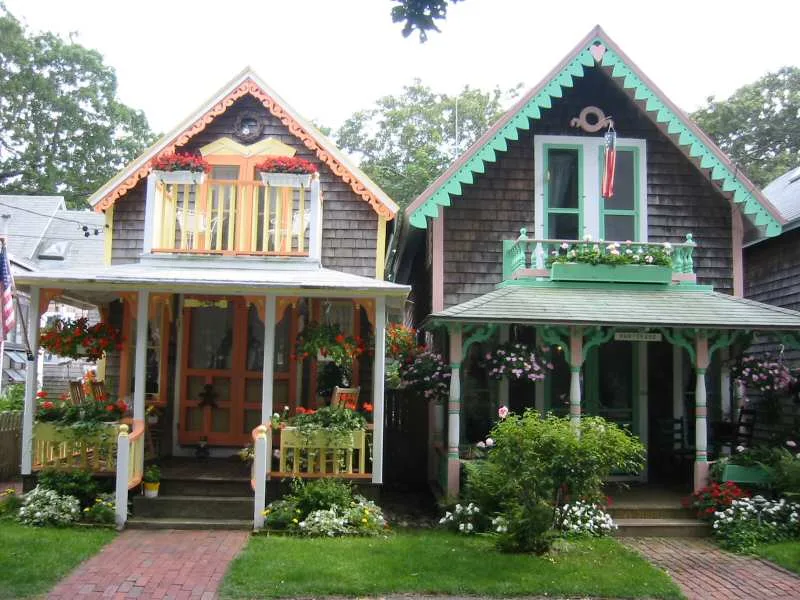
Martha's Vineyard Campground is a compact district of 306 small cottages and six public buildings on 34 shaded acres in the middle of Oak Bluffs. It began in 1835 as a Methodist camp meeting, first held among nine large tents around a preacher's stand. Over time cottages replaced tents, and the layout of circles, parks and radial avenues around Trinity Park stayed in place. The typical cottage is a narrow gable-front structure of tongue and groove boarding, with Gothic mouldings and ornate bargeboard trim. The 1879 iron Tabernacle, Trinity Methodist Church, Grace Methodist Chapel, the 1859 Association Building and two hotels complete the group. The district was listed for its distinctive cottage architecture, its exceptional preservation, and its role as a model nineteenth century Methodist campground. Its growth also led to the founding of the town of Cottage City in 1880. The Camp-Meeting Association still owns the land and oversees both religious and community life.
Machine-generated summary. This summary was generated by a language model from the official nomination document and has not been reviewed line by line by an editor. It may contain errors. Check the source document before relying on any detail. Source: nomination document (PDF) · catalog entry. Generated October 2026 (model claude-sonnet-5-5, prompt v1.0-2026-10-29).
| Period of significance | 1800-1899 |
|---|---|
| Styles | Campground cottage (Gothic-detailed) |
| Areas of significance | Community Planning and Development, Landscape Architecture, Architecture, Religion |
| Acreage | 34 |
| Boundary source | NPS cultural-resource GIS polygon |
| Full listing page | Martha's Vineyard Campground (property record) |
What listing means for this property
This is a historic district. Buildings within its boundary are either contributing (they add to the district's significance) or non-contributing. Owners of contributing income-producing buildings can claim the 20% federal rehabilitation tax credit; homeowners should look at state credits. National Register districts impose no design review by themselves; a local historic district ordinance, if one exists, does (the difference explained).
General information, not legal or tax advice. Rules change; confirm with your State Historic Preservation Office or a qualified adviser.