Maple-Union Corners

The National Park Service has not published a boundary polygon for this district; the map shows the listed properties inside it and the district's reference point.
Why it's listed
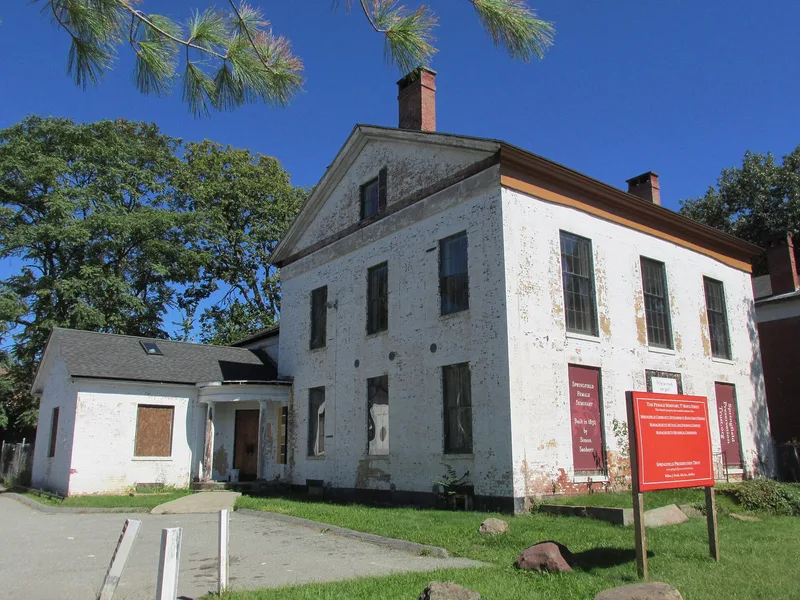
Maple-Union Corners is a one-acre cluster of brick buildings where Maple and Union Streets meet, along the first river terrace east of central Springfield. On the east side are two detached houses: 77 Maple Street, built in 1832 as the Female Seminary by Simon Sanborn and later converted to a residence, and 83 Maple Street, a Greek Revival house of 1841 built for Solymon Merrick, inventor of the monkey wrench. On the west side stand three townhouses built by Abel Howe in 1870 and a double townhouse of 1879 with a corner tower and mansard roof. Residents included bankers, woolen manufacturers, a railroad treasurer and a city mayor. The change from large detached houses to townhouses reflects rising land values on Maple Street in the late nineteenth century. Some buildings have been altered, including the removal of a mansard story and a new facade on two townhouses in the 1940s, but the group still shows the area's development.
Machine-generated summary. This summary was generated by a language model from the official nomination document and has not been reviewed line by line by an editor. It may contain errors. Check the source document before relying on any detail. Source: nomination document (PDF) · catalog entry. Generated October 2026 (model claude-sonnet-5-5, prompt v1.0-2026-10-29).
| Period of significance | 1800-1899 |
|---|---|
| Styles | Federal/Greek Revival/Second Empire |
| Areas of significance | Architecture |
| Acreage | 1 |
| Boundary source | not published |
| Full listing page | Maple-Union Corners (property record) |
What listing means for this property
This is a historic district. Buildings within its boundary are either contributing (they add to the district's significance) or non-contributing. Owners of contributing income-producing buildings can claim the 20% federal rehabilitation tax credit; homeowners should look at state credits. National Register districts impose no design review by themselves; a local historic district ordinance, if one exists, does (the difference explained).
General information, not legal or tax advice. Rules change; confirm with your State Historic Preservation Office or a qualified adviser.