Maple Street Historic District

Why it's listed
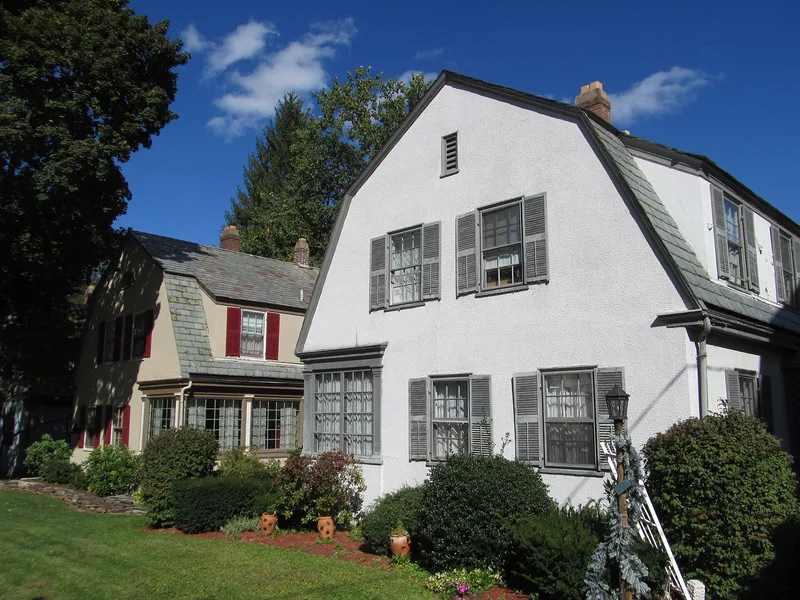
Ten one-story gambrel-roofed cottages line a tree-shaded dead-end street in Southbridge, Massachusetts, five on each side, all set gambrel end to the road. Built around 1915-1917 for foremen of the American Optical Company, they share slate roofs, stucco walls, enclosed porches or sunrooms and three-bay dormers that create a full upper story. The Boston architects Loring & Leland designed them, and the same firm drew similar cottages for machinists in Whitinsville. A 1918 Architectural Record article on factory housing illustrated one of the two projects. The side-entrance plan echoes earlier company cottages built nearby in the 1870s and 1880s, and the street is separated from that workers' neighborhood only by railroad tracks. The Wells family, who owned the company, were likely aware of progressive planning ideas for industrial villages. The district is recognized for its architecture and its link to employer-built housing, and it keeps its original setting, design and materials. The cottages remain private homes in good condition.
Machine-generated summary. This summary was generated by a language model from the official nomination document and has not been reviewed line by line by an editor. It may contain errors. Check the source document before relying on any detail. Source: nomination document (PDF) · catalog entry. Generated October 2026 (model claude-sonnet-5-5, prompt v1.0-2026-10-29).
| Period of significance | ca. 1915-1917 |
|---|---|
| Styles | Colonial Revival |
| Areas of significance | Industry, Architecture |
| Acreage | 1.2 |
| Boundary source | NPS cultural-resource GIS polygon |
| Full listing page | Maple Street Historic District (property record) |
What listing means for this property
This is a historic district. Buildings within its boundary are either contributing (they add to the district's significance) or non-contributing. Owners of contributing income-producing buildings can claim the 20% federal rehabilitation tax credit; homeowners should look at state credits. National Register districts impose no design review by themselves; a local historic district ordinance, if one exists, does (the difference explained).
General information, not legal or tax advice. Rules change; confirm with your State Historic Preservation Office or a qualified adviser.