Main Street-Locke

Why it's listed
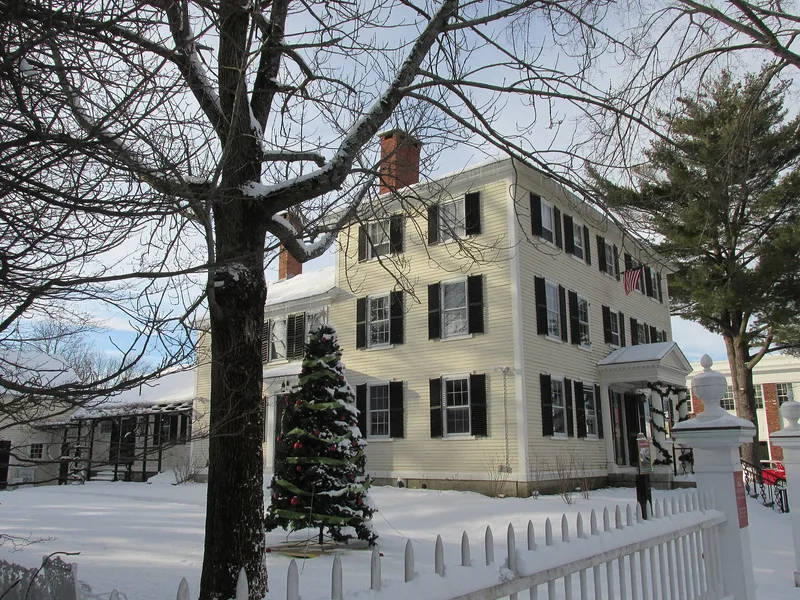
Main Street and Locke Street in Andover form a compact residential district of about 13 acres and 31 properties. Main Street was laid out in 1805 as part of the Essex Turnpike, and early buildings included farmhouses and a boarding house for Academy and Seminary students, which became Locke's Tavern in 1825. Greek Revival houses followed, some by builder Jacob Chickering, and the late 1880s brought Queen Anne and Colonial Revival buildings. Locke Street, laid out in 1869, was developed around 1890 to 1910 with Colonial Revival and Shingle Style designs, including the 1891 November Club, the first clubhouse in New England built for women. The district shows a range of styles from Federal through Shingle, reflecting the comfortable middle-class business and professional families who lived here. Uniform setbacks, spacing and suburban landscaping add to its character. Only one modern building, at 104 Main Street, is considered an intrusion.
Machine-generated summary. This summary was generated by a language model from the official nomination document and has not been reviewed line by line by an editor. It may contain errors. Check the source document before relying on any detail. Source: nomination document (PDF) · catalog entry. Generated October 2026 (model claude-sonnet-5-5, prompt v1.0-2026-10-29).
| Period of significance | 1820-1920 |
|---|---|
| Styles | Federal through Shingle styles, including Greek Revival, Italianate, Second Empire, Queen Anne and Colonial Revival |
| Areas of significance | Commerce, Architecture |
| Acreage | 13 |
| Boundary source | NPS cultural-resource GIS polygon |
| Full listing page | Main Street-Locke (property record) |
What listing means for this property
This is a historic district. Buildings within its boundary are either contributing (they add to the district's significance) or non-contributing. Owners of contributing income-producing buildings can claim the 20% federal rehabilitation tax credit; homeowners should look at state credits. National Register districts impose no design review by themselves; a local historic district ordinance, if one exists, does (the difference explained).
General information, not legal or tax advice. Rules change; confirm with your State Historic Preservation Office or a qualified adviser.