Main Street Historic District

Why it's listed
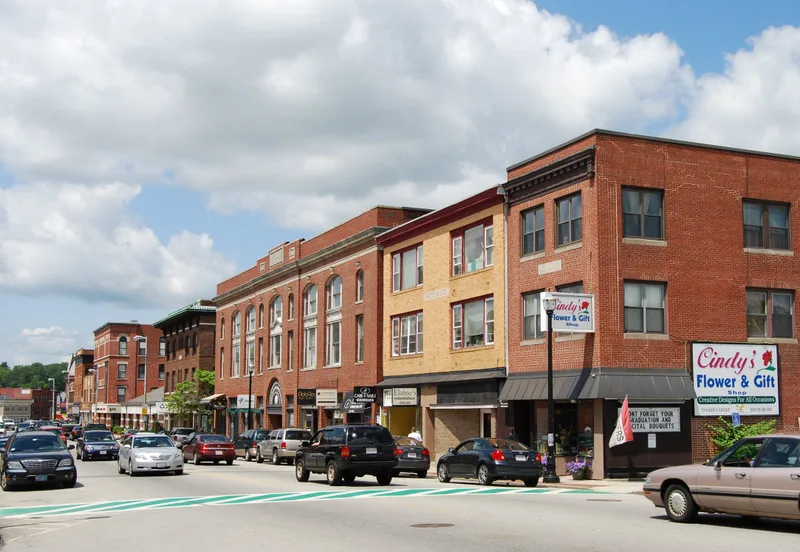
Main Street in Webster holds a row of sixteen commercial buildings, two to four stories tall and built out to a uniform line at the sidewalk. Most are brick and date from 1888 to about 1925. Before the Tracy Block went up in 1888, the area was mostly free-standing houses. Development was slow in the 1890s, then picked up after 1900 with speculative and owner-built blocks such as the Tiffany, Racicot, Gilles and Holden Blocks. The Holden Block, built in 1921, housed bowling alleys, pool rooms, stores, an arcade and a dance hall. The Tracy and Columbia Blocks, designed by Worcester architects, keep their terracotta and rock-faced granite trim above the ground floor. By 1925 the street mixed shops, apartments, amusements and offices, a pattern that lasted until postwar shopping centers drew business away. It was listed as the best-preserved part of Webster's central business district, for its architecture and its role in the town's commercial history.
Machine-generated summary. This summary was generated by a language model from the official nomination document and has not been reviewed line by line by an editor. It may contain errors. Check the source document before relying on any detail. Source: nomination document (PDF) · catalog entry. Generated October 2026 (model claude-sonnet-5-5, prompt v1.0-2026-10-29).
| Period of significance | 1888-ca. 1925 |
|---|---|
| Styles | Varied styles including Queen Anne, Renaissance Revival, Beaux Arts, Classical Revival, Moderne and eclectic; some blocks astylistic |
| Areas of significance | Commerce, Architecture |
| Acreage | 2 |
| Boundary source | NPS cultural-resource GIS polygon |
| Full listing page | Main Street Historic District (property record) |
What listing means for this property
This is a historic district. Buildings within its boundary are either contributing (they add to the district's significance) or non-contributing. Owners of contributing income-producing buildings can claim the 20% federal rehabilitation tax credit; homeowners should look at state credits. National Register districts impose no design review by themselves; a local historic district ordinance, if one exists, does (the difference explained).
General information, not legal or tax advice. Rules change; confirm with your State Historic Preservation Office or a qualified adviser.