Machine Shop Village District

Why it's listed
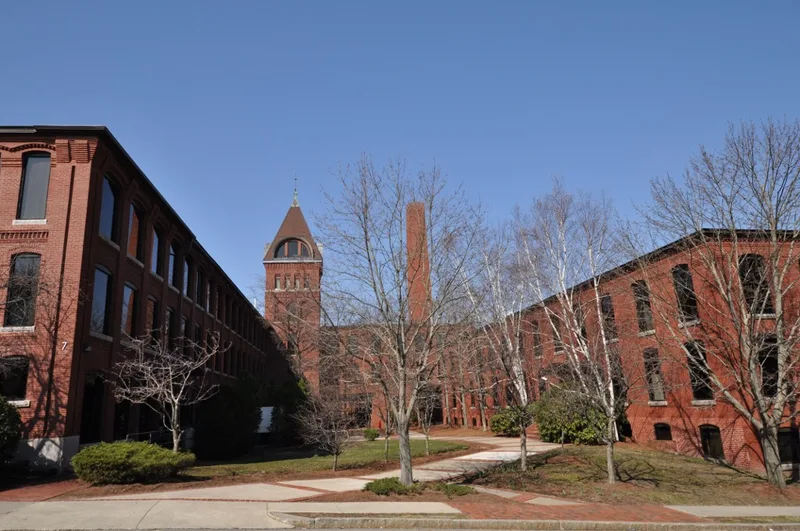
Machine Shop Village is a nineteenth-century factory neighborhood in North Andover, Massachusetts, spread over about 90 acres beside Cochichewick Brook. Its core is the brick Davis & Furber Machine Company, founded in 1832 and for many years the largest maker of woolen machinery in the United States, and the North Andover Mills, whose first stone building dates to about 1825. Around the mills the owners built rows of simple double cottages, duplexes and boarding houses, such as the eight-unit Yellow Row of about 1839. Machinists and supervisors lived in more stylish Greek Revival and Italianate homes, while mill owners built mansions such as the Second Empire Wiley Mansion of 1864-65. Three mid-century churches, a school and a few stores also remain. The district is notable for its integrity, with very little modern intrusion, and for showing the social and economic layers of a New England mill village. Growth peaked from the 1860s through the 1880s, followed by decline in the twentieth century.
Machine-generated summary. This summary was generated by a language model from the official nomination document and has not been reviewed line by line by an editor. It may contain errors. Check the source document before relying on any detail. Source: nomination document (PDF) · catalog entry. Generated October 2026 (model claude-sonnet-5-5, prompt v1.0-2026-10-29).
| Period of significance | 1800-1899, 1900- |
|---|---|
| Styles | Greek Revival, Federal, Italianate, Second Empire, Stick, Queen Anne, Romanesque Revival; vernacular mill and workers' housing |
| Areas of significance | Commerce, Architecture |
| Acreage | 90 |
| Boundary source | NPS cultural-resource GIS polygon |
| Full listing page | Machine Shop Village District (property record) |
What listing means for this property
This is a historic district. Buildings within its boundary are either contributing (they add to the district's significance) or non-contributing. Owners of contributing income-producing buildings can claim the 20% federal rehabilitation tax credit; homeowners should look at state credits. National Register districts impose no design review by themselves; a local historic district ordinance, if one exists, does (the difference explained).
General information, not legal or tax advice. Rules change; confirm with your State Historic Preservation Office or a qualified adviser.