Lynn Fells Parkway, Metropolitan Park System of Greater Boston

Why it's listed
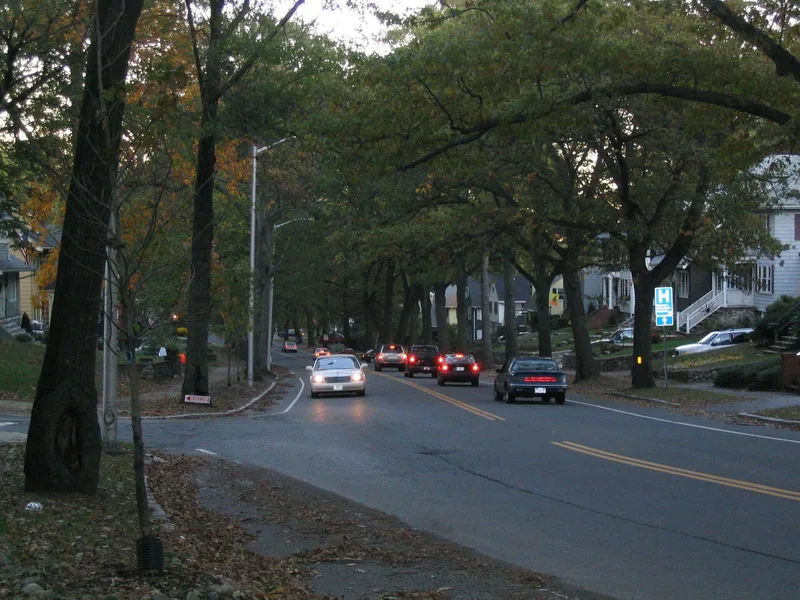
Lynn Fells Parkway is a 4.83-mile, two-lane connecting parkway through Melrose and Saugus, Massachusetts. Proposed in 1897 as a link between the Middlesex Fells and Lynn Woods, it was designed by the Olmsted Brothers for the Metropolitan Parks Commission. Construction began in 1906 at the western end near the Fells, where a steel plate girder bridge carries a Boston & Maine rail line over the road. Crews laid a mattress of trees and limbs, 80 feet wide and 1,700 feet long, to stabilize fill across soft ground at Ell Pond. The Melrose section is 40 feet wide with planting strips and sidewalks and has no median. The Saugus section narrows to 30 feet. Extension east to the Newburyport Turnpike was contracted in 1929, and the bridge was rebuilt in 1930. The parkway never reached Lynn Woods but still connects the Middlesex Fells, Breakheart Reservation and U.S. Route 1. It remains a relatively intact example of single-carriageway parkway design.
Machine-generated summary. This summary was generated by a language model from the official nomination document and has not been reviewed line by line by an editor. It may contain errors. Check the source document before relying on any detail. Source: nomination document (PDF) · catalog entry. Generated October 2026 (model claude-sonnet-5-5, prompt v1.0-2026-10-29).
| Period of significance | 1906-1937 |
|---|---|
| Areas of significance | Community Planning and Development, Conservation, Engineering, Entertainment/Recreation, Landscape Architecture, Transportation |
| Acreage | 23 |
| Boundary source | NPS cultural-resource GIS polygon |
| Full listing page | Lynn Fells Parkway, Metropolitan Park System of Greater Boston (property record) |
What listing means for this property
This is a historic district. Buildings within its boundary are either contributing (they add to the district's significance) or non-contributing. Owners of contributing income-producing buildings can claim the 20% federal rehabilitation tax credit; homeowners should look at state credits. National Register districts impose no design review by themselves; a local historic district ordinance, if one exists, does (the difference explained).
General information, not legal or tax advice. Rules change; confirm with your State Historic Preservation Office or a qualified adviser.