Lower Union Street Historic District

Why it's listed
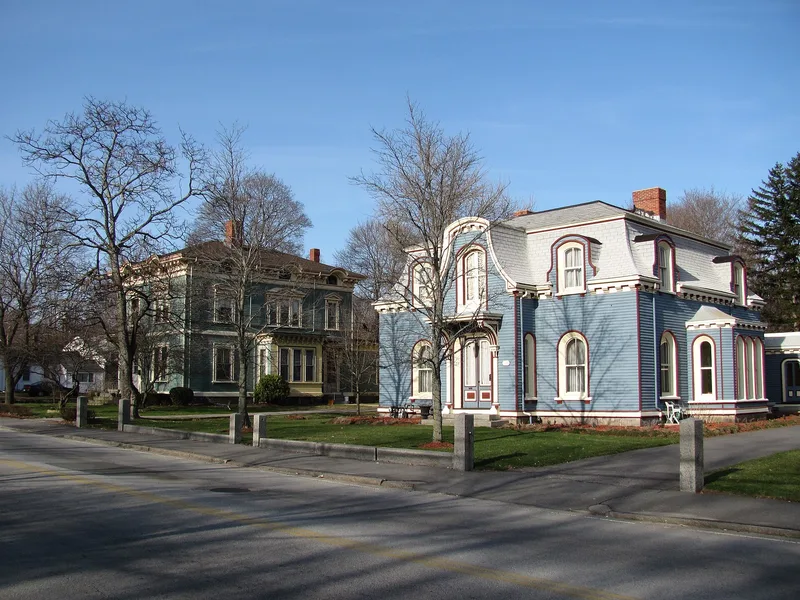
Union Street in central Rockland, Massachusetts, is lined with houses built between 1816 and about 1910, forming a district of 36 contributing and 21 non-contributing buildings. Many were homes of shoe manufacturers and other prominent townspeople. Rockland became a shoemaking center in the nineteenth century, with factories once standing at the foot of Union Street and nearby. The Lane family alone built seven houses here, and Jenkins Lane opened a factory at the street's southern end in 1834. The architecture runs from Federalist examples such as the 1816 David Lane House through Greek Revival, Cape Cod, Italianate, Second Empire, Victorian Gothic, Queen Anne and Bungalow designs. The Hotel Thomas, built in 1874 as a wagon express office, is the main commercial building. Although some houses have been resided, the street keeps a consistent, well-preserved character. The district was recognised locally for both its ties to the shoe industry and its concentration of distinguished buildings, and it may also hold archaeological remains of mills.
Machine-generated summary. This summary was generated by a language model from the official nomination document and has not been reviewed line by line by an editor. It may contain errors. Check the source document before relying on any detail. Source: nomination document (PDF) · catalog entry. Generated October 2026 (model claude-sonnet-5-5, prompt v1.0-2026-10-29).
| Period of significance | 1816-1910 |
|---|---|
| Styles | Federalist, Greek Revival, Italianate, Second Empire, Victorian Gothic, Cape Cod Cottage, Queen Anne, Colonial Revival, Bungalow |
| Areas of significance | Industry, Architecture |
| Acreage | 23 |
| Boundary source | NPS cultural-resource GIS polygon |
| Full listing page | Lower Union Street Historic District (property record) |
What listing means for this property
This is a historic district. Buildings within its boundary are either contributing (they add to the district's significance) or non-contributing. Owners of contributing income-producing buildings can claim the 20% federal rehabilitation tax credit; homeowners should look at state credits. National Register districts impose no design review by themselves; a local historic district ordinance, if one exists, does (the difference explained).
General information, not legal or tax advice. Rules change; confirm with your State Historic Preservation Office or a qualified adviser.