Lincoln Historic District

Why it's listed
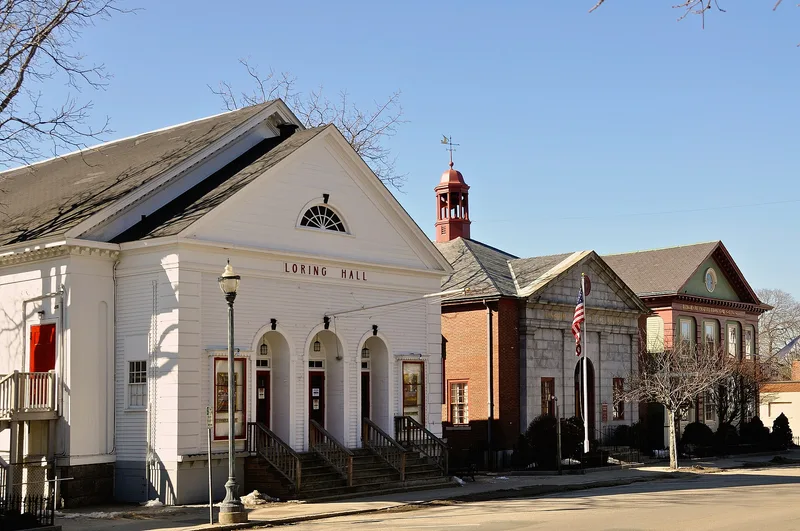
Hingham's Lincoln Historic District covers roughly 260 acres north of the town's center, beside Hingham Harbor. It follows the early streets laid out along Town Brook, including North, South, Lincoln and Main Streets. The district contains 568 contributing resources: houses, churches, a school, civic buildings, monuments and a cemetery. Twelve houses date from the 17th century, though their exteriors have been encased or rebuilt, and about sixty-seven more follow the 18th century Colonial form. Many buildings grew by additions over time, such as the General Benjamin Lincoln House, begun in 1667 and enlarged in 1715 and 1790. The Old Ship Meeting House of 1681 is described as the oldest building in ecclesiastical use in the United States, known for its "Hingham truss." The district was listed because its downtown streetscapes have survived with unusual integrity, and because Hingham builders favored conservative styles, returning repeatedly to Colonial and Colonial Revival forms.
Machine-generated summary. This summary was generated by a language model from the official nomination document and has not been reviewed line by line by an editor. It may contain errors. Check the source document before relying on any detail. Source: nomination document (PDF) · catalog entry. Generated October 2026 (model claude-sonnet-5-5, prompt v1.0-2026-10-29).
| Styles | Colonial/Georgian, Federal, Greek Revival, Gothic Revival, Italianate, Second Empire, Queen Anne, Shingle Style, Romanesque, Colonial Revival, Craftsman |
|---|---|
| Areas of significance | Commerce, Education, European, Science, Architecture, Maritime History |
| Acreage | 260 |
| Boundary source | NPS cultural-resource GIS polygon |
| Full listing page | Lincoln Historic District (property record) |
What listing means for this property
This is a historic district. Buildings within its boundary are either contributing (they add to the district's significance) or non-contributing. Owners of contributing income-producing buildings can claim the 20% federal rehabilitation tax credit; homeowners should look at state credits. National Register districts impose no design review by themselves; a local historic district ordinance, if one exists, does (the difference explained).
General information, not legal or tax advice. Rules change; confirm with your State Historic Preservation Office or a qualified adviser.