Leverett Center Historic District

The National Park Service has not published a boundary polygon for this district; the map shows the listed properties inside it and the district's reference point.
Why it's listed
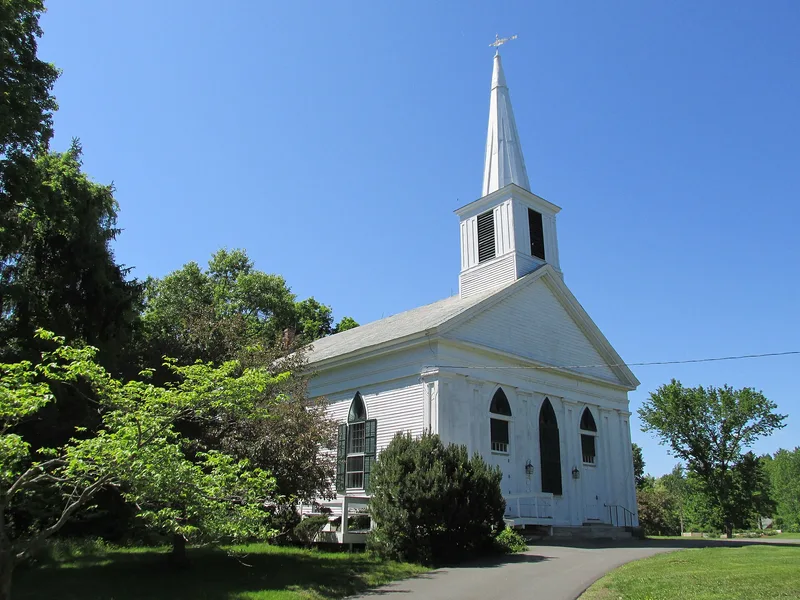
Leverett Center Historic District covers about 467 acres in the southern half of Leverett, a rural Franklin County town of roughly 2,000 people. It runs about two miles along Depot and Montague Roads and centers on a civic core near Leverett Pond, where the town common once lay. Town Hall, the Post Office, the First Congregational Church, the former Beaman-Marvell Box Factory and the Field Memorial Library cluster there. Most contributing buildings are modest wood-frame houses with restrained detail, representing Georgian, Federal, Greek Revival, Gothic Revival and Colonial Revival styles. Stone walls line the roads, and no working farms remain, though historic barns survive. The district holds 46 contributing and 51 noncontributing resources, and its period of significance runs from about 1750 to 1958. It reflects the town's growth from farming settlement to a small center with a railroad link, a box factory and the separation of church and town government. Painter Erastus Salisbury Field is among the local figures associated with the area.
Machine-generated summary. This summary was generated by a language model from the official nomination document and has not been reviewed line by line by an editor. It may contain errors. Check the source document before relying on any detail. Source: nomination document (PDF) · catalog entry. Generated October 2026 (model claude-sonnet-5-5, prompt v1.0-2026-10-29).
| Period of significance | ca. 1750-1958 |
|---|---|
| Styles | Georgian, Federal, Greek Revival, Gothic Revival, Colonial Revival |
| Areas of significance | Architecture, Community Planning and Development |
| Acreage | 467 |
| Boundary source | not published |
| Full listing page | Leverett Center Historic District (property record) |
What listing means for this property
This is a historic district. Buildings within its boundary are either contributing (they add to the district's significance) or non-contributing. Owners of contributing income-producing buildings can claim the 20% federal rehabilitation tax credit; homeowners should look at state credits. National Register districts impose no design review by themselves; a local historic district ordinance, if one exists, does (the difference explained).
General information, not legal or tax advice. Rules change; confirm with your State Historic Preservation Office or a qualified adviser.