Lawton Place Historic District

The National Park Service has not published a boundary polygon for this district; the map shows the listed properties inside it and the district's reference point.
Why it's listed
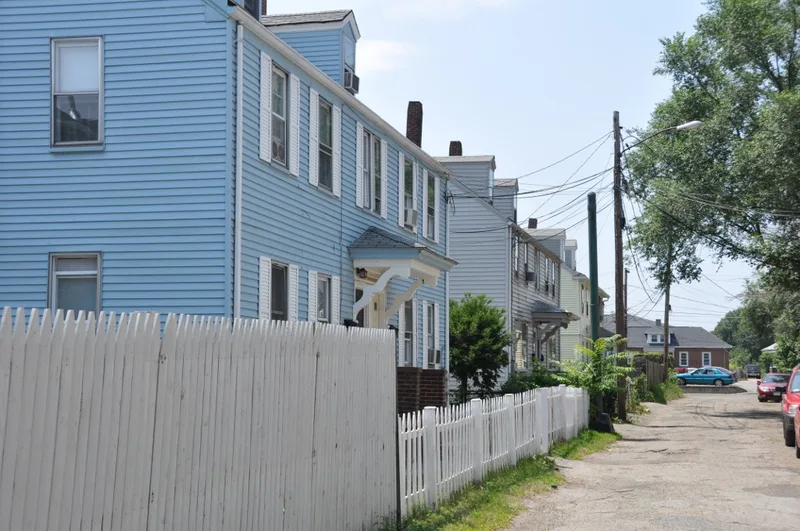
Lawton Place is a short street in Waltham Center holding four buildings tied to the Boston Manufacturing Company, the first full-process textile mill in the United States. Three double houses on the south side date from about 1817 and were built as boarding houses for mill workers. They were moved to the street in 1889 from the edge of Waltham Common. They are boxy two-and-a-half-story buildings with six-bay facades, paired center entries and two rear ells, and later siding and entry changes. The 1889 rowhouse on the north side holds twelve units and was the last of the company's row-housing type, which began with the 1816 Long Block, demolished when the houses were moved. The Waltham houses served as the prototype for boarding houses at Lowell's Merrimack Manufacturing Company. The street follows a former garden path on the estate of George Lawton, a company executive. The district was listed for its association with early industrial worker housing and for its architecture, with an exception for moved buildings.
Machine-generated summary. This summary was generated by a language model from the official nomination document and has not been reviewed line by line by an editor. It may contain errors. Check the source document before relying on any detail. Source: nomination document (PDF) · catalog entry. Generated October 2026 (model claude-sonnet-5-5, prompt v1.0-2026-10-29).
| Period of significance | 1815-1889 |
|---|---|
| Styles | Federal (c1817 double houses); Italianate (1889 rowhouse) |
| Areas of significance | Industry, Community Planning and Development, Architecture |
| Acreage | 1 |
| Boundary source | not published |
| Full listing page | Lawton Place Historic District (property record) |
What listing means for this property
This is a historic district. Buildings within its boundary are either contributing (they add to the district's significance) or non-contributing. Owners of contributing income-producing buildings can claim the 20% federal rehabilitation tax credit; homeowners should look at state credits. National Register districts impose no design review by themselves; a local historic district ordinance, if one exists, does (the difference explained).
General information, not legal or tax advice. Rules change; confirm with your State Historic Preservation Office or a qualified adviser.