Lancaster Mills

Why it's listed
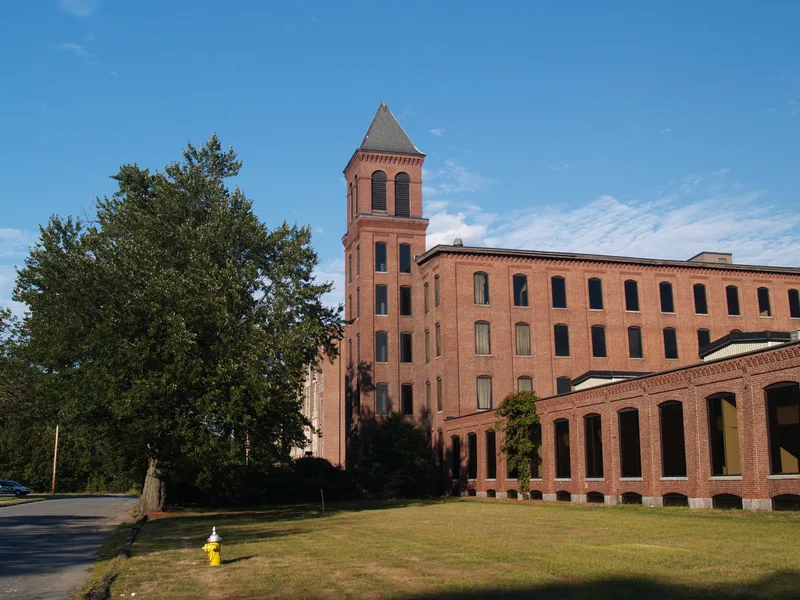
Lancaster Mills is a large textile mill complex in Clinton, Massachusetts, set along the Nashua River at the head of the Wachusett Reservoir. Begun in 1844 by the Bigelow brothers, it grew through several building campaigns into a group of brick mills, shops, a storehouse and an octagonal office, ranging from one to seven stories. Mill No. 1, the weaving mill, dominates the site; it is a vast one-story building whose roof and floor are carried by separate structural systems. Later additions include the 1910 reinforced-concrete Amory Mill and a seven-story concrete and brick cotton store house of about 1920 to 1922, both associated with the engineering firm Lockwood, Greene & Co. Engineer John Chipman Hoadley helped build many early structures. The mills employed many women and immigrant workers before closing around 1931. Colonial Press later used the complex until 1977, and it then stood vacant until 1981. The site is also considered likely to hold historic archaeological remains from earlier mills and water-power works.
Machine-generated summary. This summary was generated by a language model from the official nomination document and has not been reviewed line by line by an editor. It may contain errors. Check the source document before relying on any detail. Source: nomination document (PDF) · catalog entry. Generated October 2026 (model claude-sonnet-5-5, prompt v1.0-2026-10-29).
| Styles | 19th and 20th Century Industrial; Late Victorian/Italianate |
|---|---|
| Areas of significance | Architecture, Social History, Engineering, Industry |
| Acreage | 29.1 |
| Boundary source | NPS cultural-resource GIS polygon |
| Full listing page | Lancaster Mills (property record) |
What listing means for this property
This is a historic district. Buildings within its boundary are either contributing (they add to the district's significance) or non-contributing. Owners of contributing income-producing buildings can claim the 20% federal rehabilitation tax credit; homeowners should look at state credits. National Register districts impose no design review by themselves; a local historic district ordinance, if one exists, does (the difference explained).
General information, not legal or tax advice. Rules change; confirm with your State Historic Preservation Office or a qualified adviser.