Kirkland Place Historic District

Why it's listed
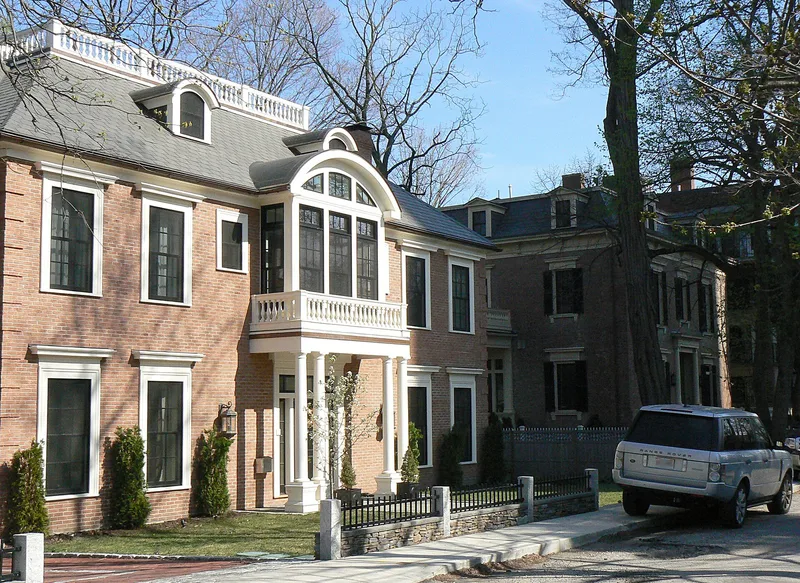
Kirkland Place is a quiet cul-de-sac of seven houses close to Harvard University in Mid-Cambridge. The street was platted in the mid-1850s by local architect and builder Isaac Cutler, who designed four Bracketed Italianate houses there. The earliest house, a Greek Revival dwelling built by John Ware in 1839 for his daughters, was moved back on its lot to make room for Cutler's work. The best-known building is the Loring-Pierce House of 1856, an early Mansard-style design by amateur architect Henry Greenough and the only survivor of four Mansard houses he designed in Cambridge. Early owners included a judge and a mathematics professor, though most were not connected with Harvard. A small brick house of 1921 is the only later addition and is not intrusive because of its size and setback. Sheltered from busy Kirkland Street, the street keeps its mid-nineteenth-century residential character and is the only intact enclave surviving from Professors' Row.
Machine-generated summary. This summary was generated by a language model from the official nomination document and has not been reviewed line by line by an editor. It may contain errors. Check the source document before relying on any detail. Source: nomination document (PDF) · catalog entry. Generated October 2026 (model claude-sonnet-5-5, prompt v1.0-2026-10-29).
| Period of significance | 1839-1857 |
|---|---|
| Styles | Mid-19th-century residential styles: Bracketed Italianate, Mansard, Greek Revival; one Neo-Georgian house (1921) |
| Areas of significance | Architecture |
| Acreage | 2.4 |
| Boundary source | NPS cultural-resource GIS polygon |
| Full listing page | Kirkland Place Historic District (property record) |
What listing means for this property
This is a historic district. Buildings within its boundary are either contributing (they add to the district's significance) or non-contributing. Owners of contributing income-producing buildings can claim the 20% federal rehabilitation tax credit; homeowners should look at state credits. National Register districts impose no design review by themselves; a local historic district ordinance, if one exists, does (the difference explained).
General information, not legal or tax advice. Rules change; confirm with your State Historic Preservation Office or a qualified adviser.