Kensington Park Historic District

Why it's listed
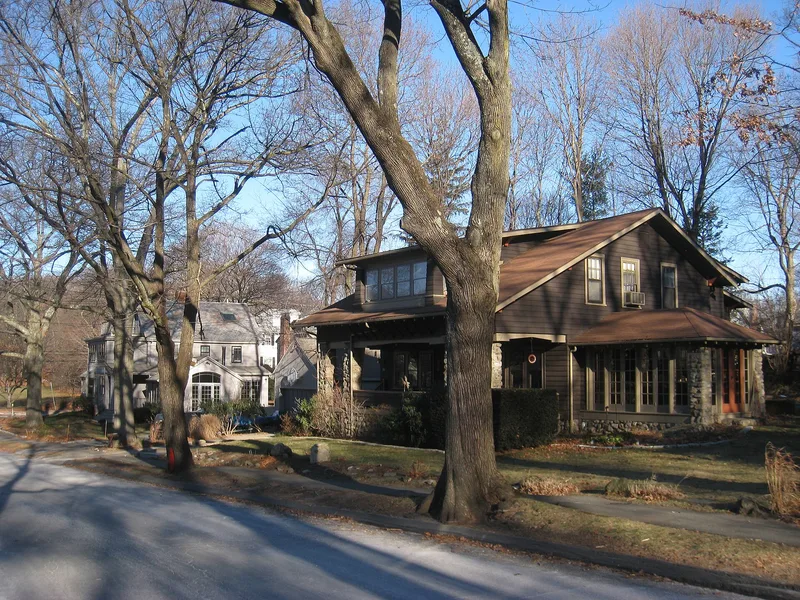
Kensington Park is a hillside residential enclave in Arlington, Massachusetts, laid out in the mid 1890s for affluent Boston-area businessmen. Subdivided from land held by the Hill, Lewis and Gray families, it was promoted by an investment syndicate that included architect C. Herbert McClare, who managed the development and designed a number of its houses. Buyers were drawn by clean air, views, wooded lots, paved roads, water pipes and nearby trolley and train service to Boston. Winding roads climb a rocky, wooded ridge, and many houses on Brantwood and Kensington Roads overlook Pleasant Street, Spy Pond and the distant skyline. The district holds 44 properties, 38 of them contributing, in Queen Anne, Shingle Style, Colonial Revival, Craftsman and Bungalow designs. The McClare House at 9 Brantwood Road is cited as one of Arlington's finest Queen Anne and Shingle Style residences. The neighborhood was listed for its planned character, architecture and well-preserved setting.
Machine-generated summary. This summary was generated by a language model from the official nomination document and has not been reviewed line by line by an editor. It may contain errors. Check the source document before relying on any detail. Source: nomination document (PDF) · catalog entry. Generated October 2026 (model claude-sonnet-5-5, prompt v1.0-2026-10-29).
| Period of significance | 1896-1920 |
|---|---|
| Styles | Queen Anne, Shingle Style, Colonial Revival, Bungalow/Craftsman, Tudor Revival |
| Areas of significance | Community Planning and Development, Architecture |
| Acreage | 12 |
| Boundary source | NPS cultural-resource GIS polygon |
| Full listing page | Kensington Park Historic District (property record) |
What listing means for this property
This is a historic district. Buildings within its boundary are either contributing (they add to the district's significance) or non-contributing. Owners of contributing income-producing buildings can claim the 20% federal rehabilitation tax credit; homeowners should look at state credits. National Register districts impose no design review by themselves; a local historic district ordinance, if one exists, does (the difference explained).
General information, not legal or tax advice. Rules change; confirm with your State Historic Preservation Office or a qualified adviser.