Kendal Green Historic District

Why it's listed
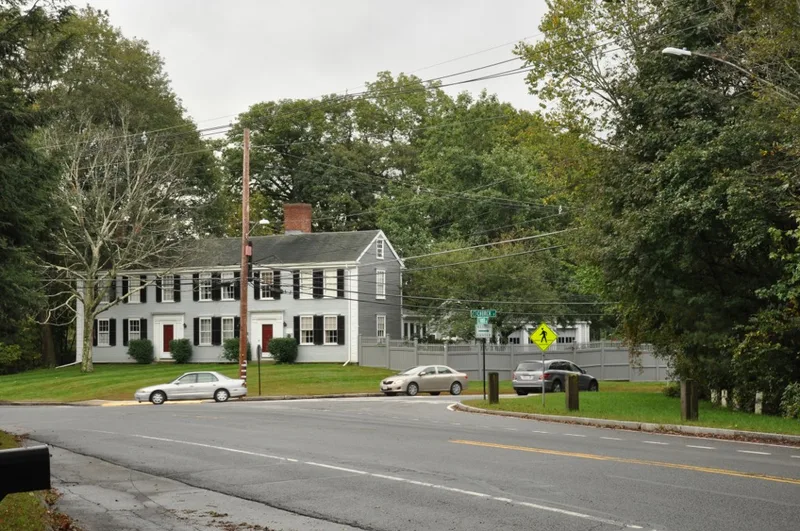
Kendal Green is a 50-acre neighborhood in northeast Weston, Massachusetts, strung along North Avenue between Hobbs Brook Road and Viles Street, with extensions to Church Street, Viles Street and Brook Road. Its 48 resources include farmhouses, barns, factory worker housing, a railroad station, a concrete fire station and a former summer hotel. The oldest building is the saltbox Whitney Tavern, dating to about 1707-8, and Federal houses such as the 1823 Hastings Homestead sit nearby. In the late 19th century the Hastings organ factory shaped the area, leaving a Shingle Style owner's house and stable by Hartwell and Richardson and a dozen Shingle Style and Queen Anne workers' houses. The factory closed in 1935 and was demolished the next year. The district reflects Weston's agricultural roots, its industry, and its later role as a summer resort. It is also linked to two residents notable in education and music. Stone walls, mature trees and open land add to its varied streetscape.
Machine-generated summary. This summary was generated by a language model from the official nomination document and has not been reviewed line by line by an editor. It may contain errors. Check the source document before relying on any detail. Source: nomination document (PDF) · catalog entry. Generated October 2026 (model claude-sonnet-5-5, prompt v1.0-2026-10-29).
| Styles | Colonial, Federal, Second Empire (Mansard), Queen Anne, Shingle Style, Classical Revival, Bungalow/Craftsman |
|---|---|
| Areas of significance | Agriculture, Architecture, Community Planning and Development, Entertainment/Recreation, Industry, Transportation |
| Acreage | 50 |
| Boundary source | NPS cultural-resource GIS polygon |
| Full listing page | Kendal Green Historic District (property record) |
What listing means for this property
This is a historic district. Buildings within its boundary are either contributing (they add to the district's significance) or non-contributing. Owners of contributing income-producing buildings can claim the 20% federal rehabilitation tax credit; homeowners should look at state credits. National Register districts impose no design review by themselves; a local historic district ordinance, if one exists, does (the difference explained).
General information, not legal or tax advice. Rules change; confirm with your State Historic Preservation Office or a qualified adviser.