Jacob's Pillow Dance Festival

Why it's listed
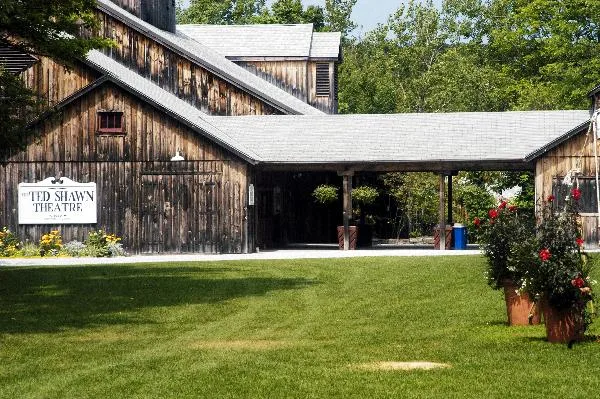
Jacob's Pillow is a dance festival campus set on a hilltop in Becket, Massachusetts, with views toward the Berkshire Hills. The complex includes theaters, studios, dancers' cabins, converted houses and barns, spread across about 150 acres of woodland and former farmland. Two late eighteenth century Federal-style farmhouses anchor the site, and the nineteenth century barns served as models for later construction. Buildings from the 1930s onward, including a fieldstone dining room, small cabins and the 1942 Ted Shawn Theatre, follow a Craftsman and barn-like vocabulary of wood and local stone. A boulder behind the Stephen Carter House gave the place its name. The property was designated a National Historic Landmark for its association with the history of American dance. Letters of support describe the festival as a leading presenting organization in the field, operating in the same location for seventy years, and it also houses archives for the festival and its school. The Stephen Carter House is the year-round headquarters.
Machine-generated summary. This summary was generated by a language model from the official nomination document and has not been reviewed line by line by an editor. It may contain errors. Check the source document before relying on any detail. Source: nomination document (PDF) · catalog entry. Generated October 2026 (model claude-sonnet-5-5, prompt v1.0-2026-10-29).
| Styles | Early Republic / Federal; Late 19th and Early 20th century Craftsman |
|---|---|
| Areas of significance | Performing Arts, Architecture |
| Acreage | 150.7 |
| Boundary source | NPS cultural-resource GIS polygon |
| Full listing page | Jacob's Pillow Dance Festival (property record) |
What listing means for this property
This is a historic district. Buildings within its boundary are either contributing (they add to the district's significance) or non-contributing. Owners of contributing income-producing buildings can claim the 20% federal rehabilitation tax credit; homeowners should look at state credits. National Register districts impose no design review by themselves; a local historic district ordinance, if one exists, does (the difference explained).
General information, not legal or tax advice. Rules change; confirm with your State Historic Preservation Office or a qualified adviser.